
Last updated August 25, 2026
Free on-site gate assessment - hinges, posts, and your LiftMaster or Nice gate operator checked before anything is quoted
The assessment is free and the quote is the invoice.
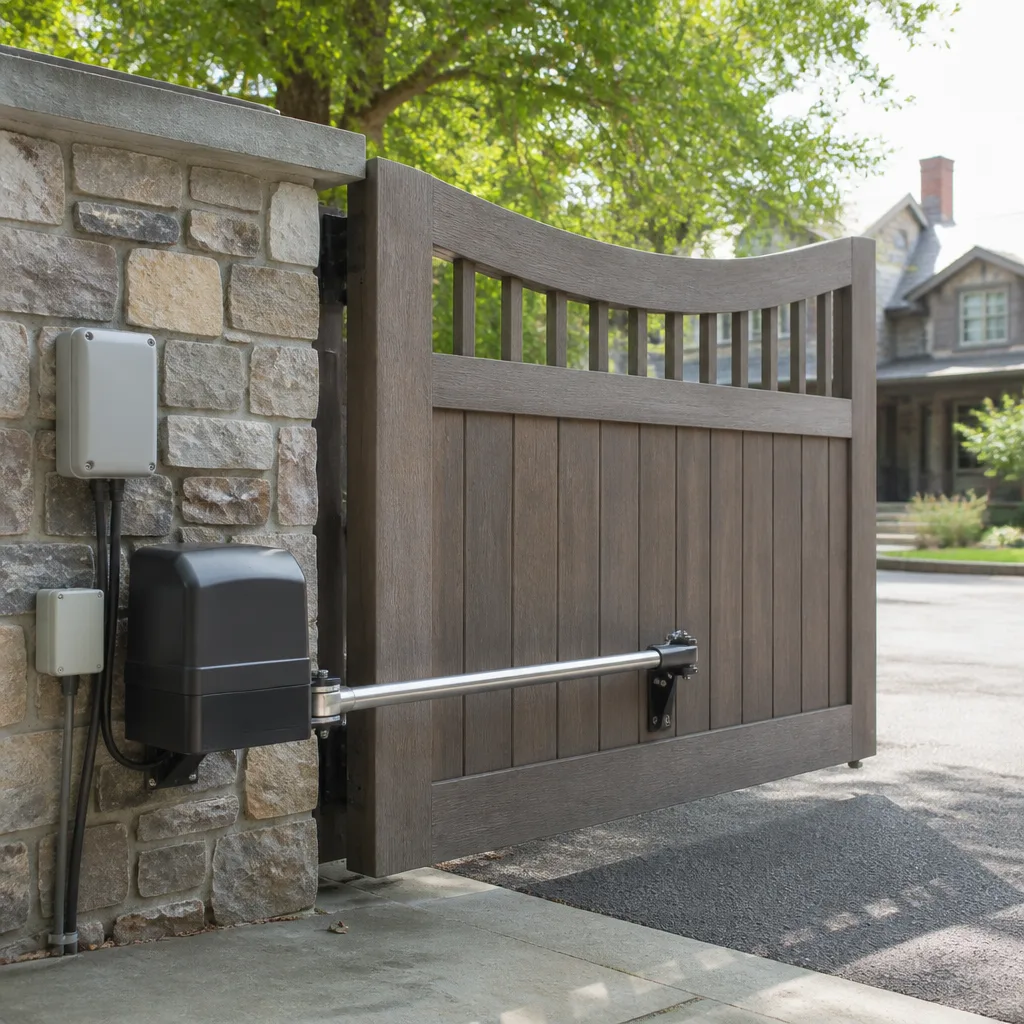
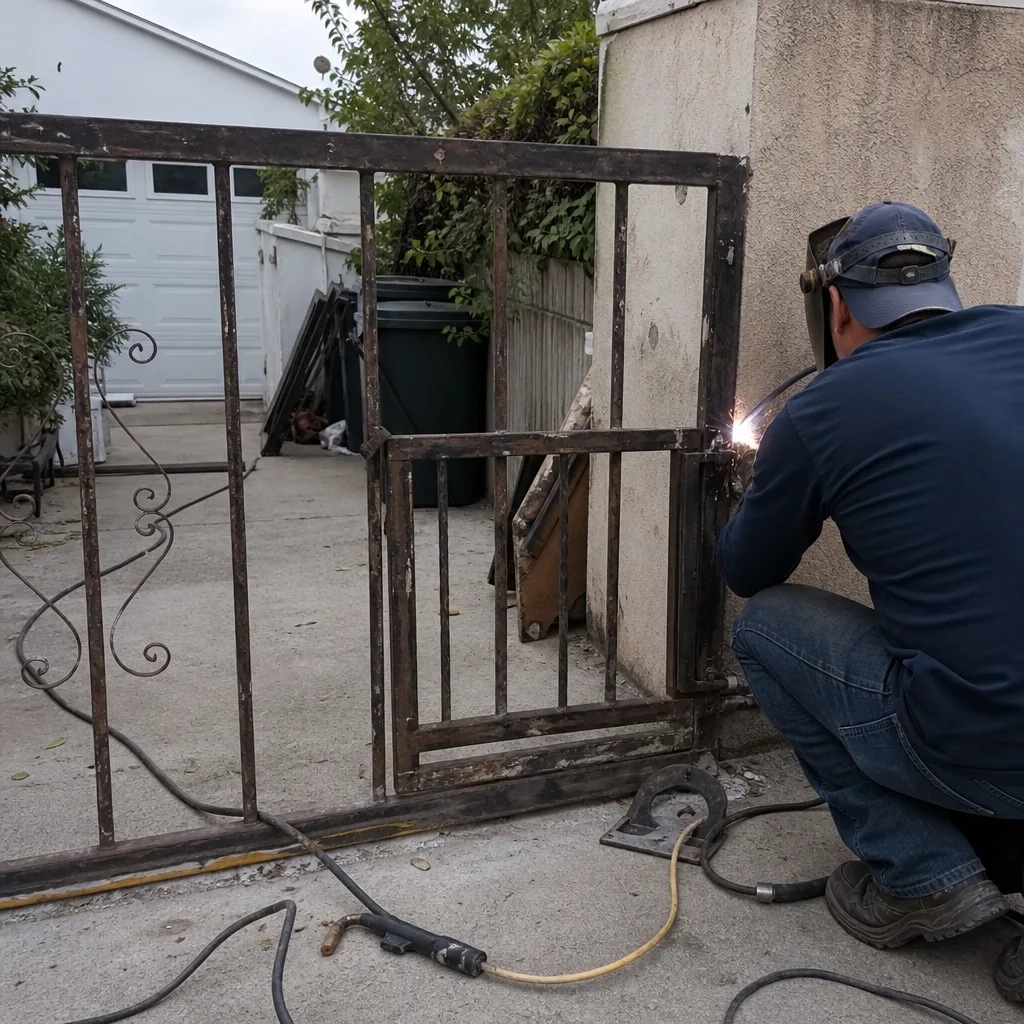 Before
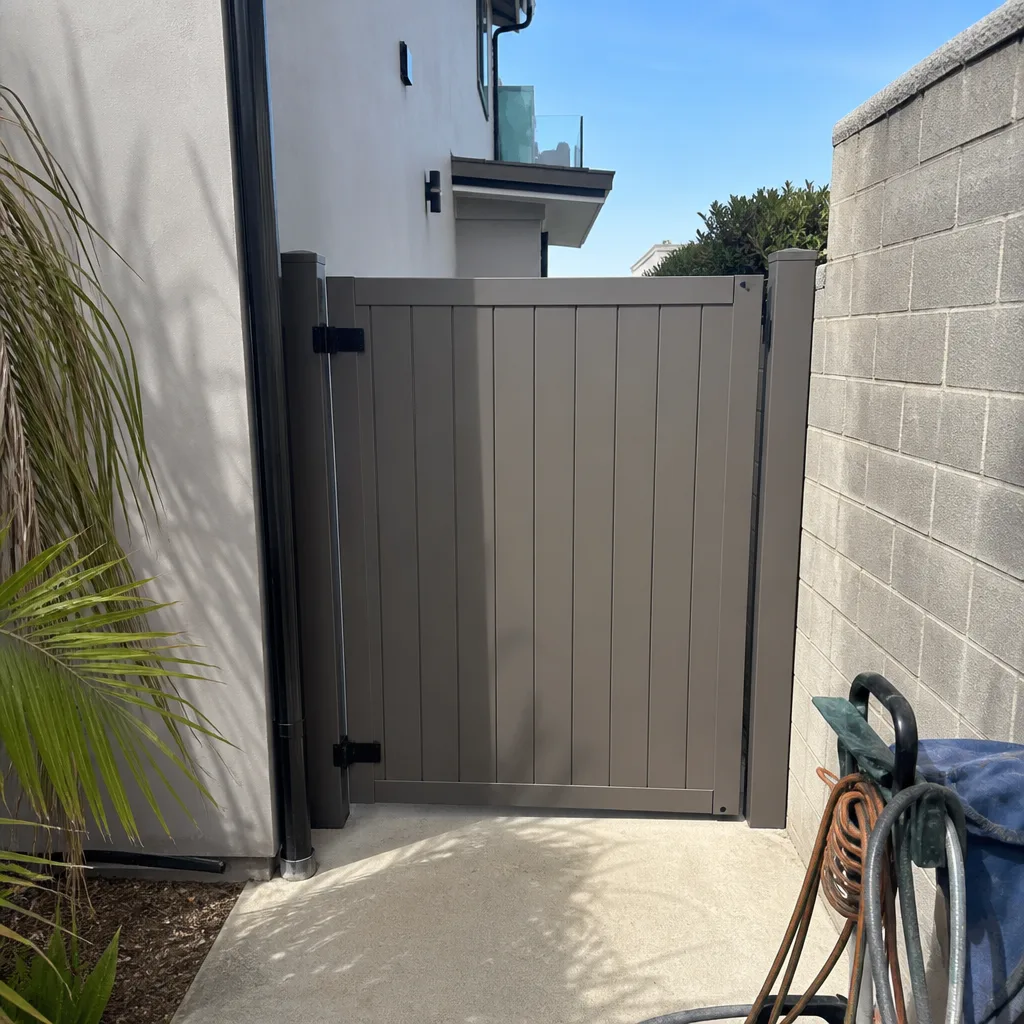 After
After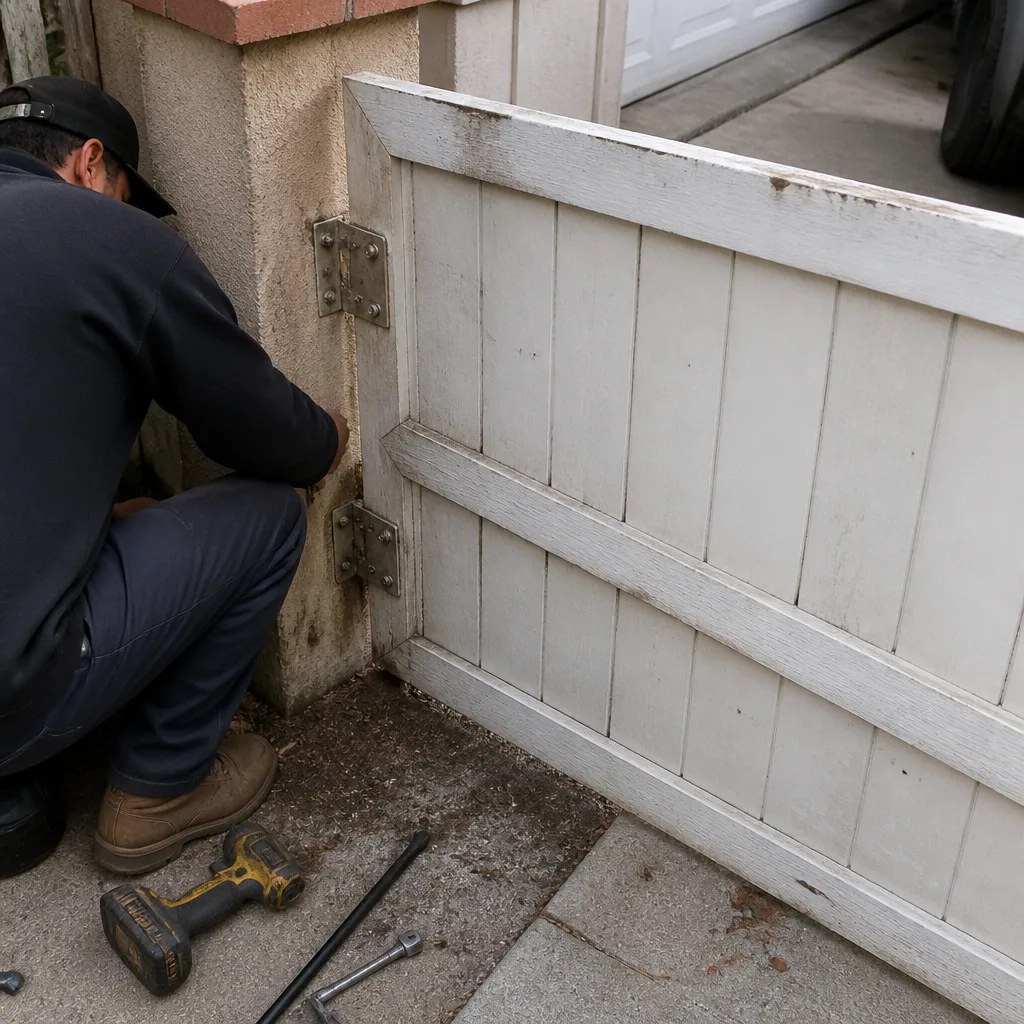 Before
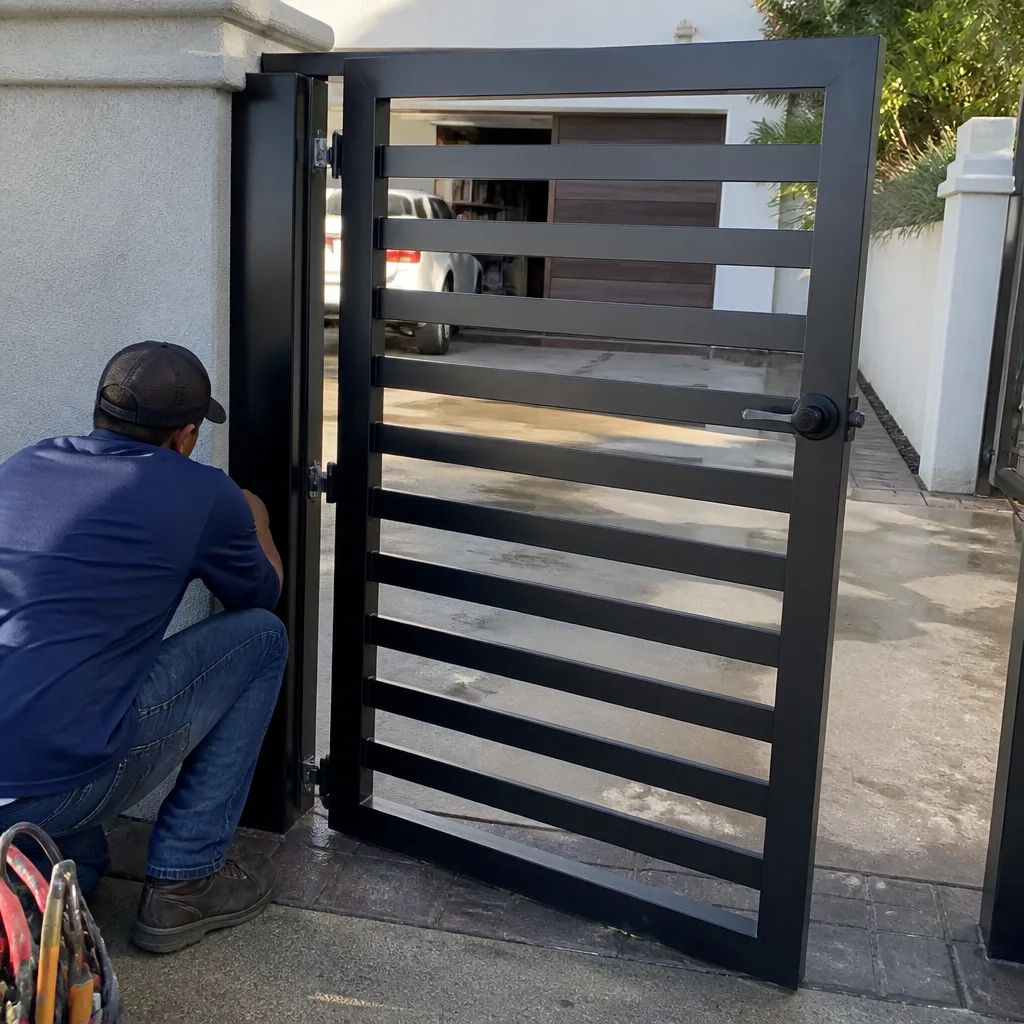 After
After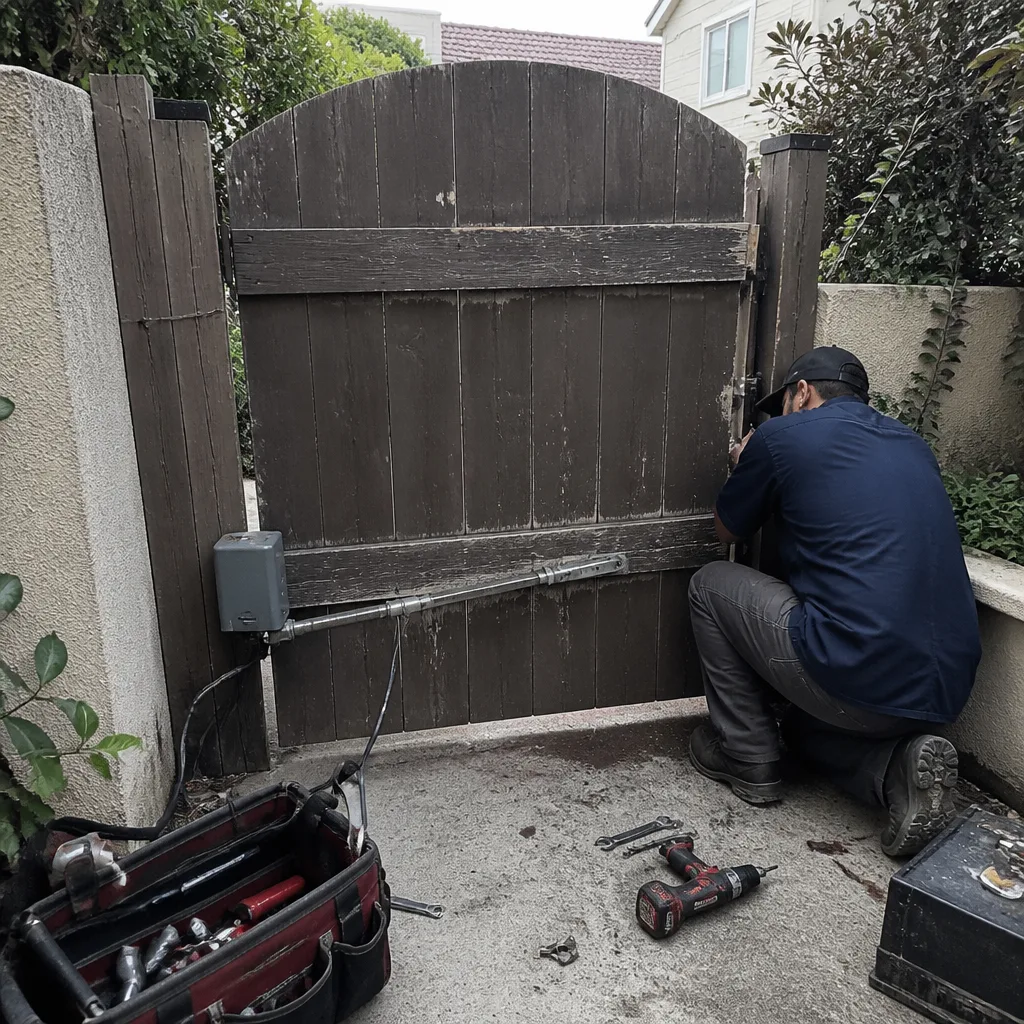 Before
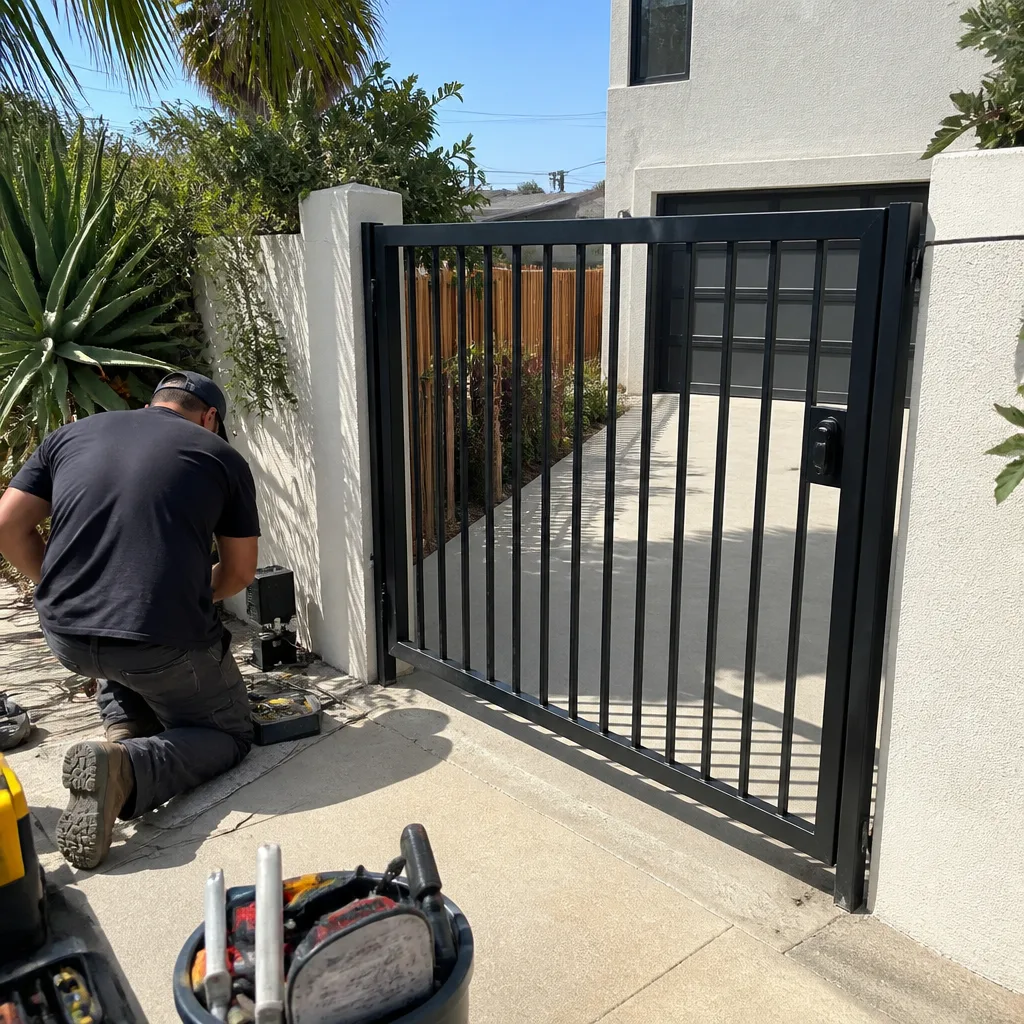 After
AfterGate Repair Warning Signs: A Hermosa Beach Homeowner’s Reference Guide
Most gate failures in Hermosa Beach don’t happen suddenly. They announce themselves weeks or even months in advance through small, easily dismissed changes: a hinge that complains on foggy mornings, a motor that pauses mid-cycle, a panel that sits a quarter-inch lower than it did last spring. Homeowners who catch these signals early typically spend a few hundred dollars on a targeted repair. Homeowners who don’t usually end up replacing the entire gate or operator at several times that cost. This guide walks through the warning signs we’ve documented across four decades of gate service in Hermosa Beach, what each sign actually means, and when a repair will save you money versus when replacement is the honest answer.
Quick Answer
The most common warning signs of a failing gate in Hermosa Beach are: a gate that moves slower than it used to, grinding or squealing noises during operation, visible sagging or leaning, hinges that show rust or wear, a motor that opens but won’t close (or vice versa), and a gate that stops mid-travel or reverses for no reason. Most of these can be repaired for $150 to $400 if caught within the first few weeks. Ignoring them for six months or more often leads to full track replacement, new hinges, or a burned-out motor, which runs $800 to $2,500 or more.
Table of Contents
- A Gate That Moves Slower Than It Used To
- Grinding, Squealing, or Metallic Noises
- A Sagging or Leaning Gate
- Rusted, Worn, or Stiff Hinges
- The Gate Opens But Won’t Close (or Closes But Won’t Open)
- Stops Mid-Travel or Reverses for No Reason
- Remote or Keypad Works Intermittently
- How Hermosa Beach’s Coastal Climate Accelerates Gate Wear
- Common Mistakes to Avoid
- When to Call a Professional
- Frequently Asked Questions
- The Bottom Line
A Gate That Moves Slower Than It Used To
A driveway gate that takes noticeably longer to open or close is the single most common early warning sign we see in Hermosa Beach. The change is usually gradual, which is why so many homeowners miss it. One day you realize the gate takes twelve seconds instead of eight, and you can’t remember when that started.
Slow operation almost always points to one of three underlying problems: resistance in the mechanical path, a motor losing power, or a power supply issue. On a slide gate, the most frequent culprit is debris in the track. Hermosa Beach’s sandy soil and the fine grit that blows off the Strand work their way into wheels and bearings. A track that has not been cleaned in a year or two develops enough friction to make the motor labor. On a swing gate, the equivalent problem is hinge wear or a settling post.
A motor losing power behaves differently than a motor fighting resistance. A struggling motor often emits a lower-pitched hum and may feel warm to the touch after operation. If the gate moves slowly and the motor housing is hot, stop operating it and have it checked. Continuing to run a motor against resistance is the fastest way to burn out the windings entirely.
In our experience across Hermosa Beach, slow gate operation that is addressed within the first month is usually a $150 to $300 fix involving track cleaning, wheel replacement, or a simple adjustment. The same symptom ignored for six months frequently becomes a $600 to $1,200 motor replacement. The math is not complicated.
Grinding, Squealing, or Metallic Noises
A healthy gate motor makes a steady, low hum. A gate in trouble makes noise you can describe: grinding, screeching, clanking, or a rhythmic thumping. Each sound points to a different problem, and learning to tell them apart will tell you whether you’re dealing with a $20 part or a $1,000 operator.
- High-pitched squealing usually means a belt or pulley slipping inside the operator. Belt-driven openers from brands like LiftMaster and DoorKing develop this after several years of coastal exposure. It’s often a quick fix: replacing the belt and tensioning it correctly.
- Low grinding or crunching typically comes from bearings in the wheels or the hinge pins. Hermosa Beach’s salt air accelerates bearing wear dramatically compared to inland locations. If the sound is coming from the wheel area rather than the motor housing, you’ll likely need wheel or bearing replacement.
- Metallic clanking during operation often indicates loose hardware: bolts that have backed out over years of vibration. A quick bolt-tightening pass can solve this, but if the holes have elongated, the fix becomes more involved.
- Rhythmic thumping in a slide gate almost always means a flat spot on a wheel or a damaged section of track. The gate literally rides over the rough spot on every cycle.
The rule of thumb we share with every Hermosa Beach homeowner: new noises are never harmless. Gates don’t self-heal. Every cycle you run with a grinding bearing puts additional wear on the motor, the track, and the other wheels. The repair bill grows every week you postpone it.
A Sagging or Leaning Gate
A driveway gate that visibly leans, drags on the ground, or sits lower on the latch side than the hinge side is telling you something structural has shifted. On a swing gate, this usually means the hinge post has begun to move in the ground or the hinges themselves have worn to the point of slop. On a slide gate, sagging typically indicates wheel wear or a track that has settled unevenly.
Hermosa Beach’s soil conditions play a real role here. Homes in the sand section, particularly north of Pier Avenue and along the Strand, often have gate posts set in sandier, less stable ground than homes in the hills east of Pacific Coast Highway. Posts that were adequate twenty years ago can begin to shift as the soil around them compacts and erodes. The result is a gate that slowly rotates out of square.
Hinge wear on a heavy steel or iron gate follows a predictable pattern. The bottom hinge carries most of the weight and wears first. As the bottom hinge elongates, the entire gate settles, and you’ll notice the latch no longer lines up cleanly with the striker. Forcing the latch closed accelerates the damage.
The fix depends on how far the problem has progressed. Early-stage sagging, caught within a few weeks, is often a hinge replacement and post re-setting, typically $250 to $600 depending on the gate’s weight. A gate that has been sagging for a year or more may have bent the hinges, elongated the mounting holes, and pulled the post far enough out of plumb that the entire assembly needs rebuilding. That conversation becomes a gate installation question rather than a repair question. For more detail on the full scope, see our guide to professional gate installation.
Rusted, Worn, or Stiff Hinges
Hinges are the most overlooked component on any swing gate, and they fail more quietly than motors or tracks. In Hermosa Beach, rust on hinges is not a cosmetic issue. It is the primary mechanical failure point for traditional swing gates, and salt air means it happens faster here than almost anywhere else in Los Angeles County.
Here is what to check, in order:
- Look at the hinge barrels. Any flaking rust, pitting, or orange staining means the protective coating has failed and the metal is actively corroding. Surface rust is manageable. Deep pitting means replacement.
- Watch the gate swing through one full cycle. If the gate hesitates, stutters, or the hinge squeaks under load, the hinge bearings or bushings are worn. A properly hung gate should swing smoothly with no resistance and no sound.
- Lift the latch side of the gate. With the gate closed, grab the latch edge and lift. Any vertical movement beyond about a quarter-inch means the bottom hinge has play. This is the same wear pattern described in the sagging section above.
- Check the weld points. On welded steel gates, hairline cracks can form where the hinge plate meets the gate frame. These cracks widen over time and ultimately cause catastrophic hinge failure.
Replacing hinges on a standard residential gate in Hermosa Beach typically runs $150 to $400 depending on gate weight and hinge quality. We source heavy-duty barrel hinges and ball-bearing hinges engineered for coastal environments, which consistently outlast the lighter hardware installed on many gates built twenty or thirty years ago.
If you find yourself tightening the same hinge bolts every few months, the problem is not the bolts. It is the hinge itself, and no amount of tightening will fix wear that has already occurred.
The Gate Opens But Won’t Close (or Closes But Won’t Open)
When a gate moves reliably in one direction but refuses to move in the other, homeowners often assume the motor is failing. In our experience across Hermosa Beach, the motor is usually fine. The problem is most often in the safety system, the limit settings, or the control board.
A gate that opens but will not close is the classic symptom of a safety sensor issue. Photo-eye sensors, also called safety edges or photoelectric sensors, are designed to prevent the gate from closing if anything is in the path. When a photo-eye is misaligned, dirty, or failing, the gate behaves exactly as if something is blocking it: it opens fine, but closing is refused or reversed. This is a designed safety behavior, not a malfunction. The fix is often as simple as cleaning the sensor lens or realigning the two eyes so they face each other directly.
A gate that closes but will not open points in a different direction. This pattern suggests the motor is receiving the close command and executing it, but the open cycle is being interrupted. Limit switches that have drifted out of position are the usual suspect. The switch that tells the operator “the gate is open, stop now” may have moved, causing the controller to think the gate has already reached its open limit even when it hasn’t moved at all.
Here is a quick diagnostic sequence we use on service calls:
- Bypass the remote entirely. Use the keypad or the manual control button on the operator. If the gate works correctly from the manual control but not the remote, the problem is in the remote or receiver.
- Check the safety sensors. Look for blinking lights on the photo-eyes. Most brands, including Mighty Mule and Elite, use LED indicators that signal alignment or fault conditions.
- Listen to the motor. When you issue the failed command, does the motor hum but not move? That’s mechanical resistance. Does it click but stay silent? That’s an electrical or control board issue.
- Check the limit switches. If you’re comfortable opening the operator housing, visually inspect that the limit cams are tight and haven’t shifted.
Safety note: gate operators contain springs, gears under tension, and in some cases capacitors that hold charge even when unplugged. If you’re not certain what you’re looking at, a trained professional is the correct call. The diagnostic visit is always cheaper than the cost of fixing a problem made worse by an accidental misadjustment.
Stops Mid-Travel or Reverses for No Reason
A gate that stops halfway through its cycle, reverses after closing, or opens partially and quits is among the most frustrating symptoms for homeowners because it seems random. It is not random. Something is triggering the safety system or the motor’s obstruction detection circuit.
The most common causes in Hermosa Beach, in order of frequency:
- Obstruction detection sensitivity set too low. Modern operators from LiftMaster, FAAC, and BFT include force-sensing technology that measures how hard the motor is working. When the force threshold is set too sensitively, normal resistance from wind, slight track debris, or a stiff hinge triggers a false obstruction reversal. A Hermosa Beach afternoon breeze off the water is enough to trigger some over-sensitive systems on exposed driveway gates.
- Track or wheel damage. A single flat-spotted wheel or a dented section of track creates a mechanical “bump” that spikes motor force at the same point in every cycle, falsely triggering the obstruction detection. The gate behaves as if something is in the way because the motor genuinely is working harder at that point.
- Failing capacitor. A capacitor that’s losing its ability to hold charge will start the motor fine initially but deliver inconsistent power as the cycle progresses. This is especially common on older slide gate operators we see throughout Hermosa Beach, many of which were installed in the 1990s and early 2000s.
- Control board degradation. Coastal moisture and salt air shorten the life of circuit boards. Corrosion on a relay or a solder joint can cause intermittent signals that mimic every problem above. Control board replacement on most residential operators runs $200 to $600 installed.
If your gate stops or reverses intermittently, do not simply increase the force setting. The force setting exists to prevent the gate from crushing something or someone. Raising it without finding the underlying cause turns a $200 wheel replacement into a safety hazard. The correct approach is to find and fix the cause, then return the force setting to its proper level.
Remote or Keypad Works Intermittently
An intermittent remote or keypad is the gate repair warning sign that most often gets misdiagnosed by homeowners as a battery problem. We replace a lot of batteries in Hermosa Beach that were the wrong fix. The real issue is typically the receiver, the antenna, or radio frequency interference.
Start with the simplest test: if the gate works reliably from the keypad mounted on the post but not from the remote in your car, the remote or its receiver is the problem. If both the keypad and the remote are flaky, the issue is almost certainly in the operator’s receiver board.
RF interference is a genuine issue in parts of Hermosa Beach, particularly for homes near the power lines that run along the eastern edge of the city and for properties with dense coastal landscaping. Interference can make a remote work some days and not others, at some distances and not others. The fix may be as simple as repositioning the antenna or switching the remote to a different frequency. Most modern DoorKing and Elite operators support multiple frequency options specifically for this reason.
A keypad that works in the morning but not the evening, or after it rains, typically points to moisture intrusion. Hermosa Beach’s marine layer leaves everything damp overnight, and keypads with failed seals or cracked housings develop internal corrosion slowly. The keypad may work for months after the first sign of trouble before failing completely. Replacing a residential keypad is a $120 to $250 job in most cases and is dramatically cheaper if caught before water reaches the wiring and the control board.
For a deeper explanation of how these systems work, see our primer on gate motors and openers.
How Hermosa Beach’s Coastal Climate Accelerates Gate Wear
Gate hardware wears out faster in Hermosa Beach than in Redondo Beach, Manhattan Beach, or anywhere else in the South Bay except perhaps the immediate beachfront streets of those cities. The reason is not the water itself. It’s the salt, the fog, and the wind in combination.
Salt air is corrosive to bare steel and to the plating on most fasteners. A hinge that would last twenty years in Torrance might last twelve to fifteen on a Hermosa Beach property within a few blocks of the ocean. The marine layer, which sits over the city most nights, keeps surfaces damp for hours after the fog has cleared, which accelerates rust formation. And the prevailing onshore breeze carries fine sand particles from the beach inland for several blocks, particularly along the Strand and the numbered streets west of Pacific Coast Highway.
What this means practically for homeowners:
- Galvanized or marine-grade hardware is not an upgrade in Hermosa Beach; it’s the baseline. Standard hardware store hinges and bolts will show rust within two years on most properties in the city.
- Circuit boards and connections fail faster here than inland. The salt-laden moisture attacks solder joints and connectors. We regularly see control boards in Hermosa Beach with corrosion damage that would be unusual in a comparable gate in El Segundo or Westchester.
- Powder coating and paint need more frequent touch-up. Any scratch or chip that exposes bare metal will begin corroding within weeks, not months. Touch-up paint applied early prevents the kind of deep pitting that requires welding and repainting.
- Wood gates have a shorter service life here. The damp-then-dry cycle causes wood gates to split, warp, and rot faster than in drier parts of Los Angeles. A redwood or cedar gate that would last twenty-five years in a dry climate often needs real attention at fifteen years in Hermosa Beach.
None of this means you should avoid buying a gate in Hermosa Beach. It means the maintenance schedule here is different, and the hardware choices matter more. Selecting marine-grade materials up front and doing a quick visual inspection twice a year will add years to the life of almost any gate. For an overview of what proper care looks like, see our complete gate repair services.
Common Mistakes to Avoid
- Ignoring a new noise for more than a couple of weeks. Every cycle you run with a grinding bearing or a slipping belt adds wear to neighboring components. What starts as a $180 wheel replacement becomes a $1,400 motor replacement in a few months. If your gate started making noise this season, schedule the inspection now.
- Spraying WD-40 or similar products on hinges and moving parts. Penetrating sprays wash away the grease that actually lubricates your hinges and leave behind a residue that attracts sand. Hermosa Beach’s airborne grit makes this worse within days. Your hinges need proper grease, not spray lubricant.
- Raising the force setting to stop false reversals. The obstruction detection system exists to protect people and vehicles. Increasing the force setting because the gate keeps reversing is solving the symptom, not the cause, and it creates a genuine safety hazard for children and pets.
- Tightening hinge bolts repeatedly without addressing hinge wear. If you’ve tightened the same bolts more than twice in a year, the hinge has worn past the point where tightening helps. Continuing to tighten just elongates the holes and makes the eventual repair more expensive.
- Assuming an old gate needs to be replaced when it might only need a motor or hinge service. We’ve seen forty-year-old iron gates in Hermosa Beach restored to smooth, quiet operation with new hinges and a modern operator. The metal itself ages well here if the mechanical points are maintained. Before you budget for a full replacement, get an assessment of what the existing gate actually needs.
- Buying the cheapest hardware-store hinge or wheel as a replacement. A standard zinc-plated hinge installed on a coastal gate in Hermosa Beach will be rusting within two years. Marine-grade or heavy-duty powder-coated hardware costs more up front and lasts three to four times as long.
- Skipping the twice-yearly visual inspection. A deliberate check of hinges, track, wheels, and sensors in spring and fall catches small problems before they become expensive ones. Ten minutes of inspection twice a year is the single most cost-effective habit for any gate owner in this city.
When to Call a Professional
Some gate issues are straightforward to diagnose and fix yourself: replacing remote batteries, cleaning obvious debris from a slide track, tightening an accessible bolt. Others are not. Call a professional when the gate makes noise you cannot identify, when the motor housing feels hot, when the gate stops or reverses intermittently, when sensors are involved, or when the gate is heavy enough to injure someone if it falls or moves unexpectedly. Gate operators involve springs, gears, and electrical components that can cause serious injury when handled incorrectly.
If you’re in Hermosa Beach and your gate is showing any of the warning signs in this guide, we offer free estimates and will tell you honestly whether the gate needs a repair, a tune-up, or full replacement. Call (279) 263-9485 and you’ll reach a person who can walk through what you’re seeing and schedule a visit if it makes sense. No obligation, no pressure.
Frequently Asked Questions
Most gate repairs in Hermosa Beach run between $150 and $600 depending on the component involved. Hinge replacement typically costs $150 to $400, wheel or track repair $180 to $450, sensor realignment or replacement $120 to $300, and motor replacement $600 to $2,500 depending on the operator brand and size. The price is quoted and agreed before any work starts, so there are no surprises on the bill. Call (279) 263-9485 for a free estimate on your specific gate.
Yes. Most repairs in Hermosa Beach are completed in a single visit, and we prioritize calls for gates that won’t close or won’t open because those create immediate security issues. A live person answers the phone 24 hours a day, 7 days a week, so you’ll never wait on hold or leave a voicemail and hope. Call (279) 263-9485 and tell us what’s happening with your gate.
Our technicians are trained and equipped on nine major automation brands including LiftMaster, DoorKing, Elite, and Mighty Mule, along with FAAC, BFT, Linear, Viking, and Ghost Controls. Whatever operator is on your Hermosa Beach driveway, the correct fix is made on the first visit rather than across multiple trips.
A gate that is structurally sound but has failing hardware (hinges, wheels, motor, sensors) is almost always worth repairing. A gate with severe rust through the frame, a badly warped structure, or a post that has shifted significantly in the ground may be past the point of economical repair. The honest answer depends on the specific gate. We provide free assessments in Hermosa Beach and will tell you the truth either way. See our gate installation page for what replacement involves.
Twice a year is the right interval for Hermosa Beach’s coastal environment: once in spring and once in fall. A seasonal tune-up catches hinge wear, sensor drift, and corrosion before they become failures. We offer an $89 seasonal tune-up that includes hinge lubrication, track cleaning, sensor alignment, and a full inspection of the operator.
Every job we complete in Hermosa Beach is protected by our written 90-Day Done Right Promise. If something is not right within 90 days of the completed repair or installation, we come back and make it right. No paperwork, no arguing, no exceptions. It’s the same standard we’ve applied to every job since the company was founded, and it’s the reason most of our customers never need to call another gate company. Learn more about Ironworks Gate Co. and how we work.
The Bottom Line
Hermosa Beach gates fail predictably. The warning signs are consistent: slower operation, new noises, visible sagging, rust on the hinges, intermittent automation, and false reversals. Every one of these signals is more affordable to address in the first month than in the sixth month, and the coastal environment means the clock moves faster here than it does inland. Twice-yearly inspections, marine-grade hardware, and a willingness to investigate new symptoms promptly will add years to the life of any gate on any street in this city. When the warning signs appear, call someone who does this work every day and stands behind it in writing. Call (279) 263-9485 for a free estimate on your Hermosa Beach gate.
Written by Victor Salinas, Owner at Ironworks Gate Co., serving Hermosa Beach since 2013.