
Last updated August 25, 2026
Free on-site gate assessment - hinges, posts, and your LiftMaster or Nice gate operator checked before anything is quoted
The assessment is free and the quote is the invoice.
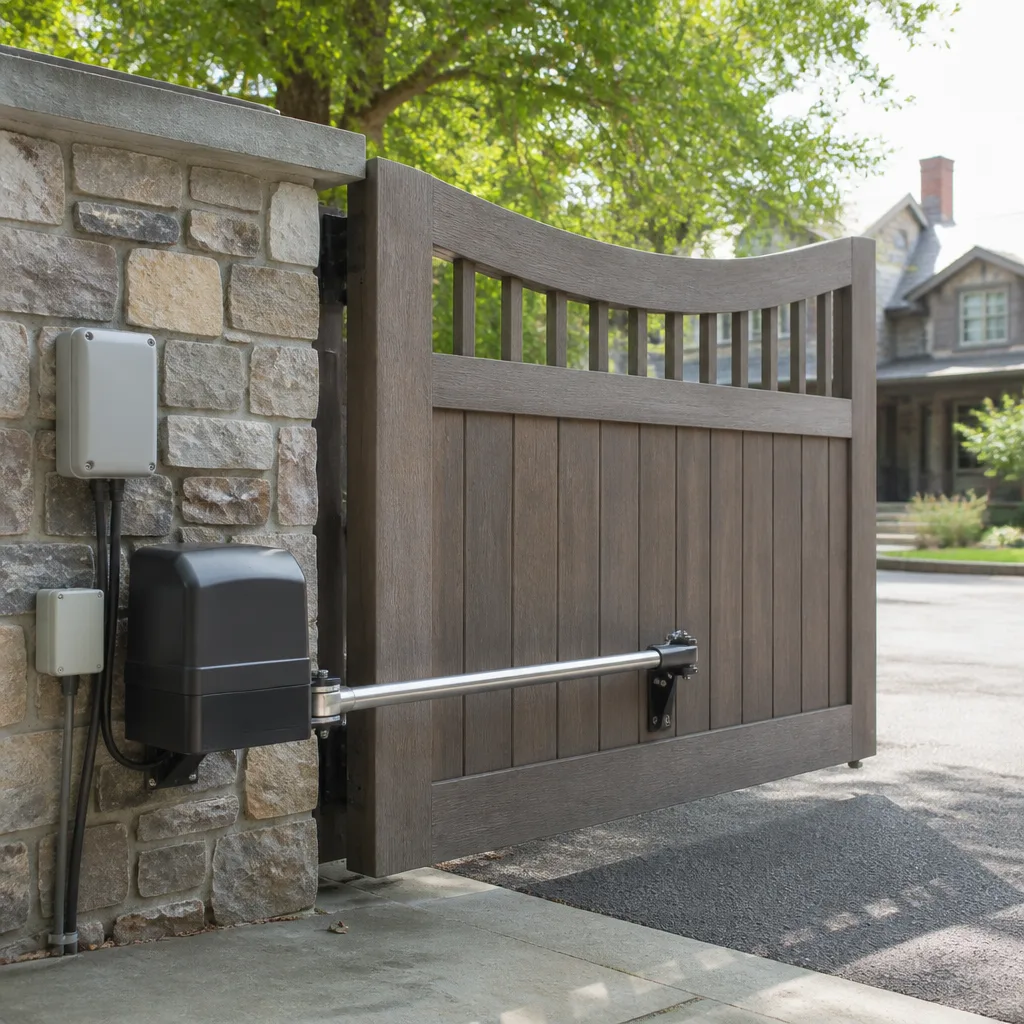
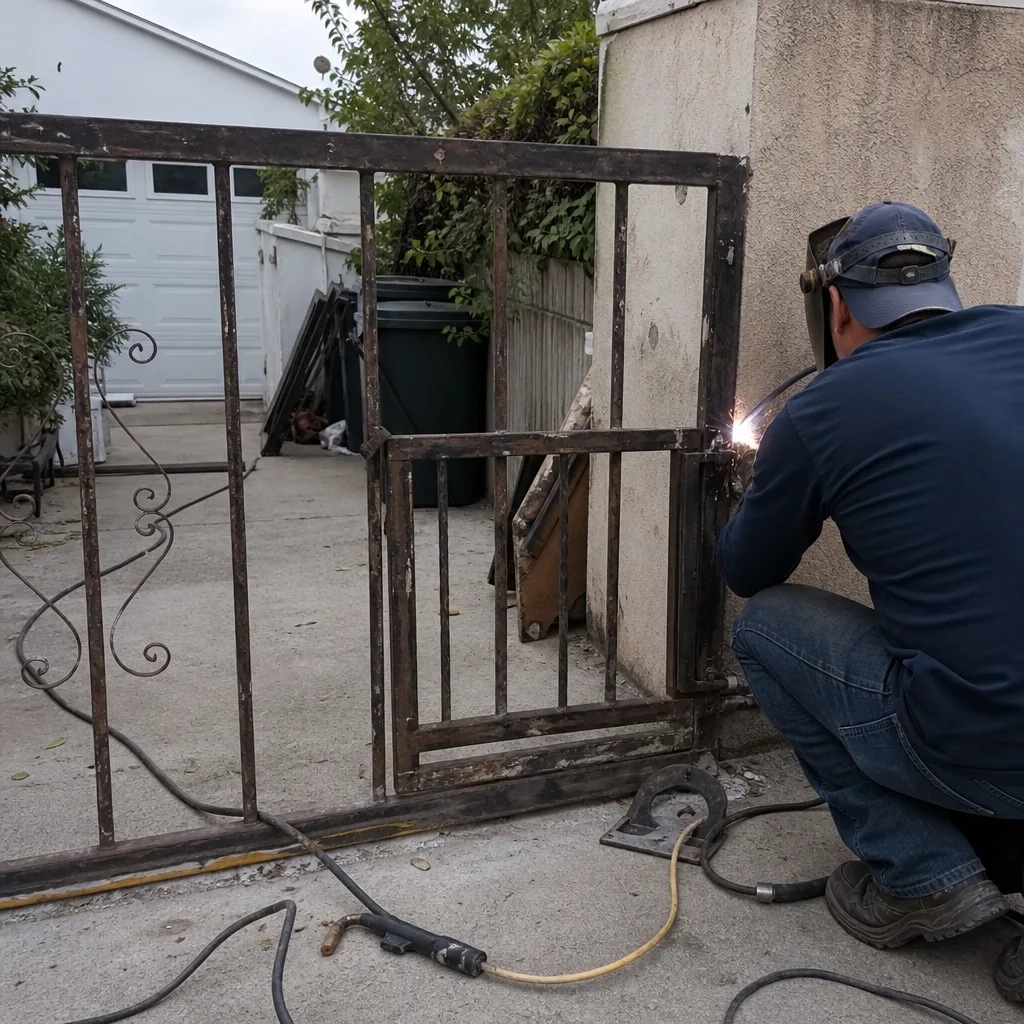 Before
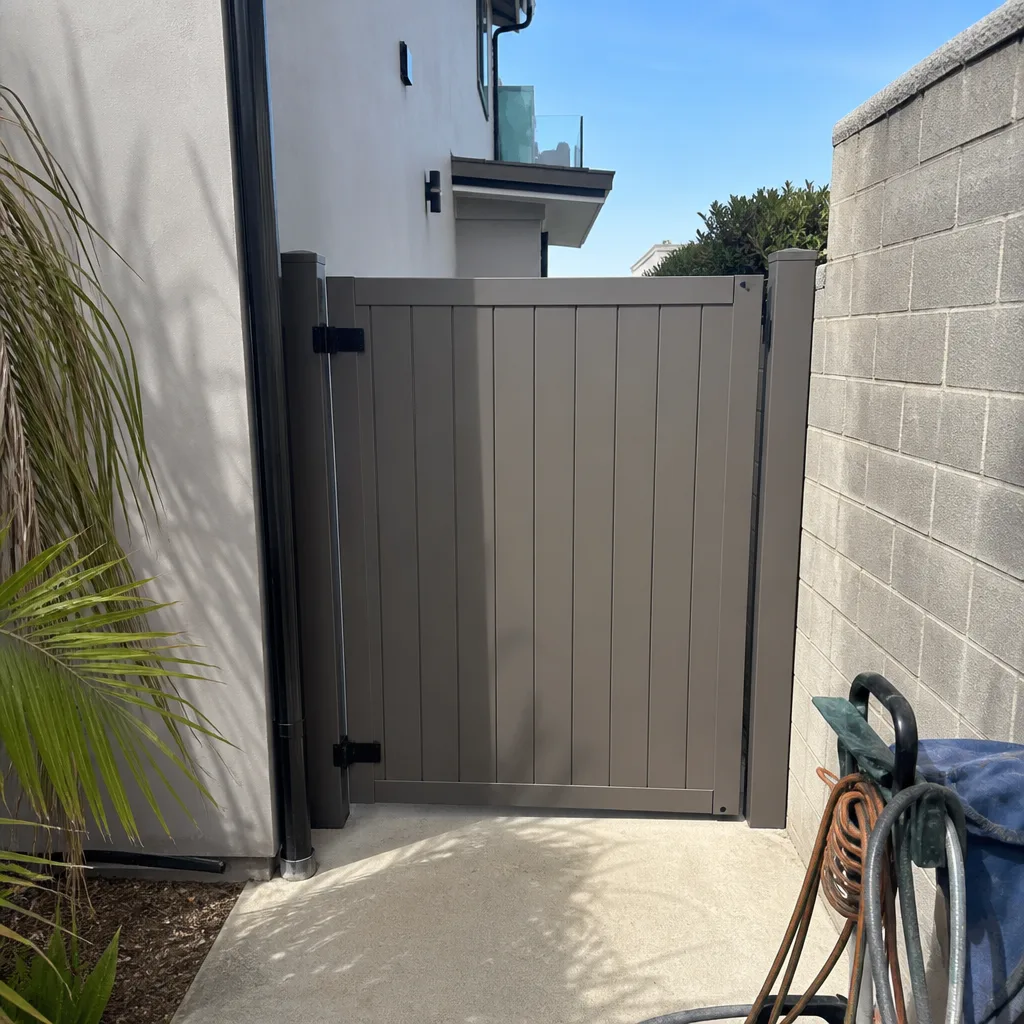 After
After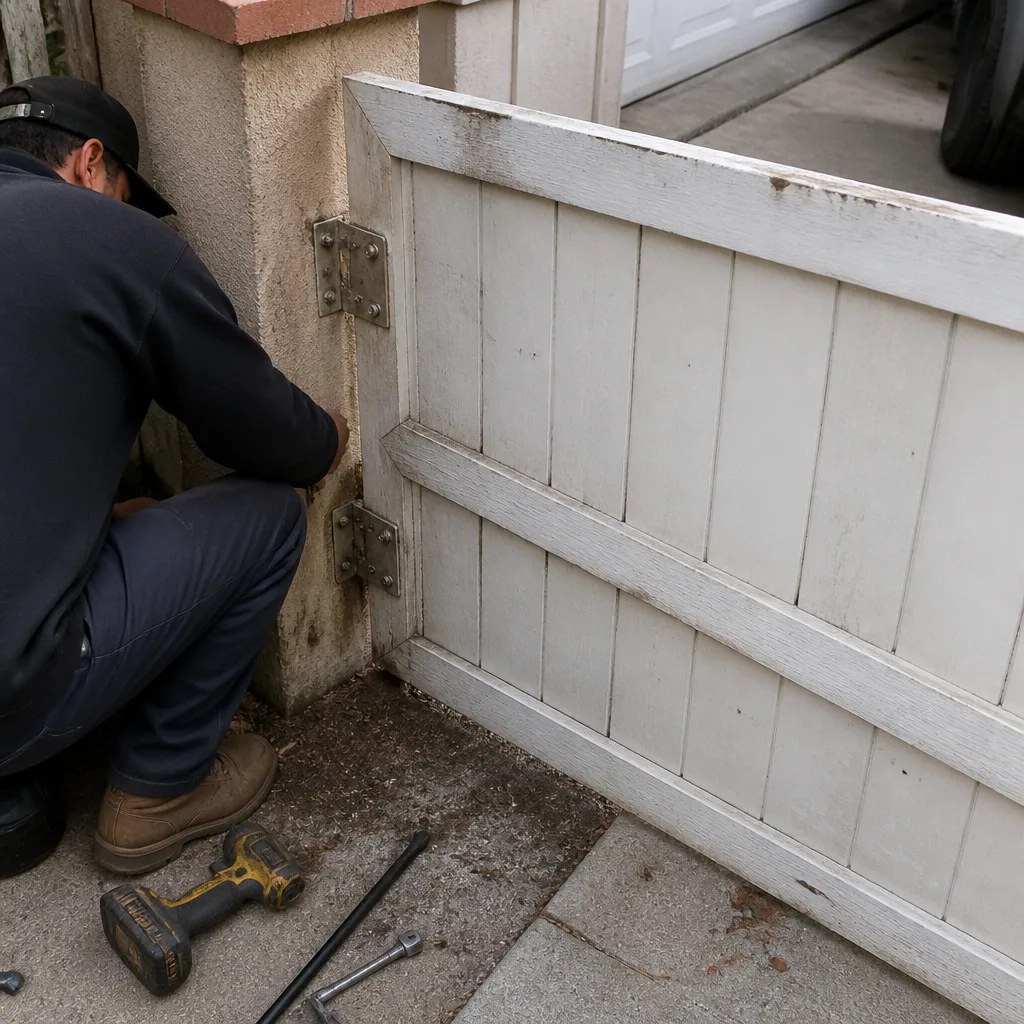 Before
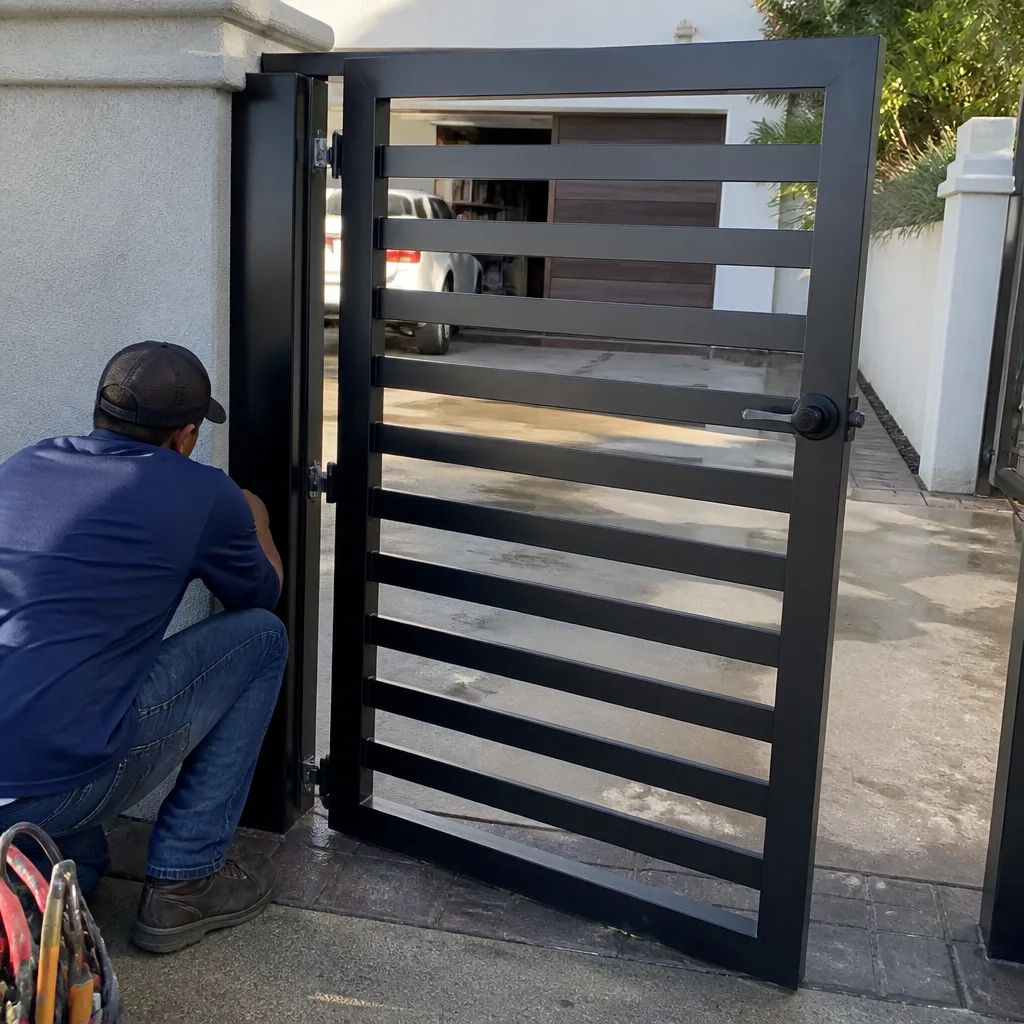 After
After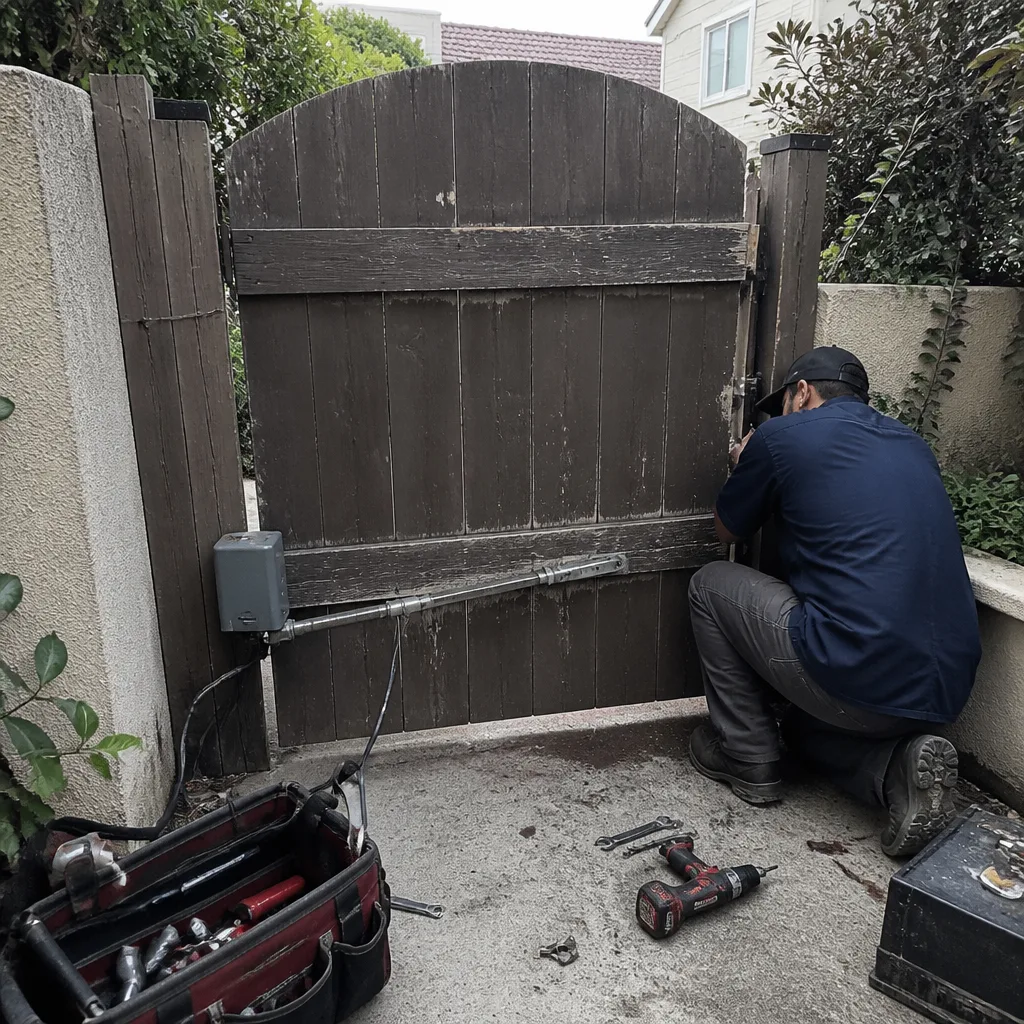 Before
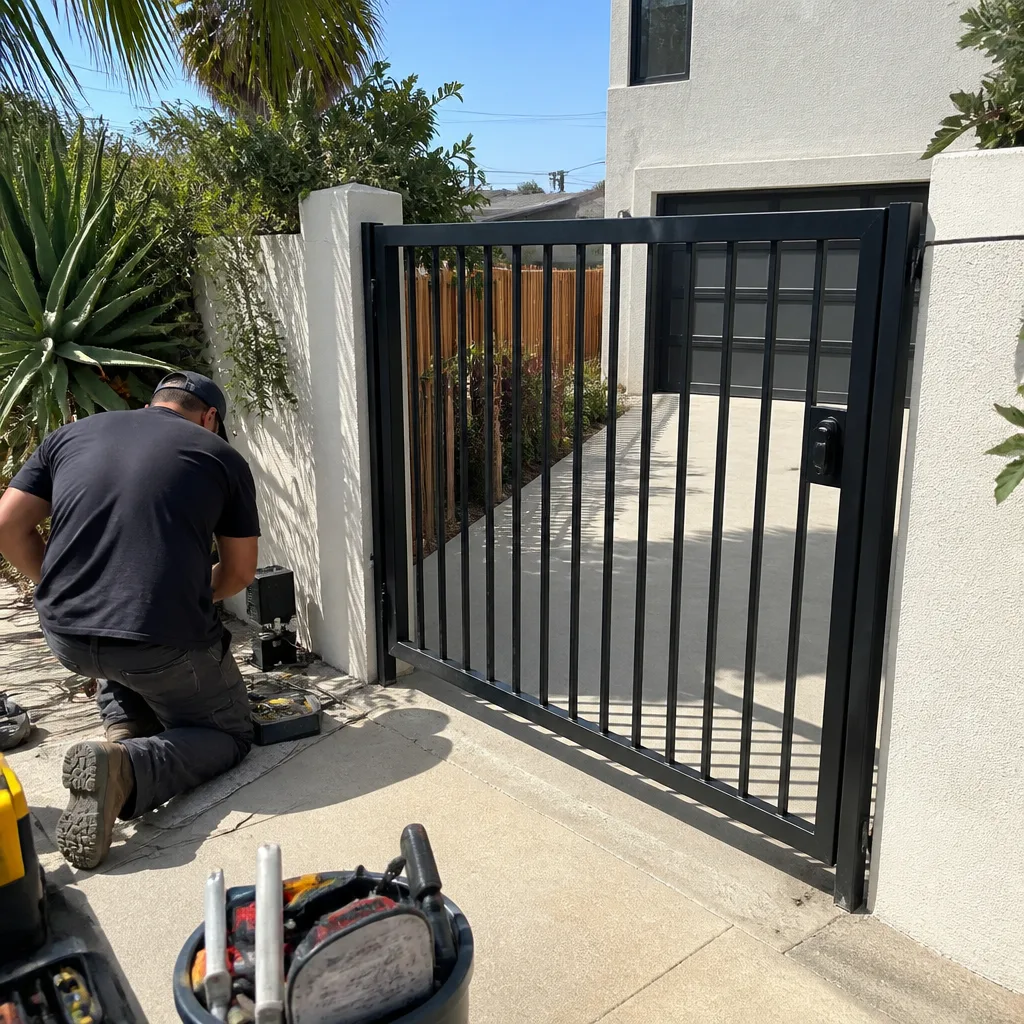 After
AfterDIY vs Professional Gate Repair: The Hermosa Beach Homeowner’s Decision Guide
Most gate failures in Hermosa Beach are not caused by what homeowners think. It’s rarely the motor giving out. It’s rarely a broken weld. More often than not, it’s the salt air working its way into a hinge over the course of a decade, or a control board shorted by moisture that never quite dries out three blocks from the Strand. This guide walks through what a homeowner can reasonably handle, what should be left to a pro, and what the real cost difference looks like when the job is done once instead of twice.
Quick Answer
For most Hermosa Beach homeowners, the smart split is this: do the visual and mechanical inspection yourself, handle surface rust and sensor cleaning yourself, and call a professional for anything involving springs, motors, control boards, or welded steel. A wrong fix on a 600-pound gate is more expensive than the right fix the first time. When in doubt, a free estimate costs nothing and prevents a bad afternoon from becoming a worse week.
Table of Contents
- What’s Realistically DIY on a Hermosa Beach Gate
- The Salt Air Factor: Why Hermosa Beach Gates Fail Differently
- Springs and Cables: The Line You Shouldn’t Cross
- Motors and Control Boards: The Diagnosis Trap
- Cost Comparison: DIY vs Professional Repair in Hermosa Beach
- When DIY Saves Real Money (and When It Doesn’t)
- A 7-Point Seasonal Inspection You Can Do This Weekend
- Common Mistakes to Avoid
- When to Call a Professional
- Frequently Asked Questions
- The Bottom Line
What’s Realistically DIY on a Hermosa Beach Gate
Let’s start with what a homeowner can actually do without special tools or a background in low-voltage wiring. We tell our Hermosa Beach customers this plainly: about a third of the service calls we run are for problems a homeowner could have spotted and sometimes fixed themselves. Not because the work is complicated, but because nobody ever showed them what to look for.
Here’s what we consider fair game for a careful homeowner:
- Visual inspection of hinges and mounting bolts. Look for rust streaks running down from the hinge pin. That orange line means water has been sitting inside the hinge, and it’s working its way out. Surface rust you can wire-brush and repaint. Deep pitting means the hinge has lost meat and needs replacement.
- Cleaning the safety sensors. The photo-eye sensors at the base of the gate get coated with salt film, spider webs, and dirt. A soft cloth and glass cleaner fixes a surprising number of “my gate won’t close” complaints. Do this monthly, especially if your home is west of Pacific Coast Highway where the marine layer sits longer.
- Tightening loose bolts and brackets. Gates vibrate with every open and close cycle. Over a year, that’s thousands of small impacts. A socket wrench and ten minutes can pull a sagging gate back into alignment before it starts dragging.
- Lubricating the hinge points. Use a silicone or lithium spray, not WD-40 for the long term. WD-40 is a solvent first. It displaces the old lubricant and leaves the hinge dry a few weeks later.
- Checking the gate’s travel path. Walk the full arc of the gate. Look for roots lifting the concrete track, stones in the path, or a wheel that no longer touches the ground. On many Hermosa Beach properties, mature ficus roots are the hidden culprit behind gates that suddenly start binding.
None of these tasks require opening the motor housing or touching anything under tension. That’s the dividing line. Once you’re reaching for a wrench on a spring or popping the cover off an operator, the risk math changes.
The Salt Air Factor: Why Hermosa Beach Gates Fail Differently
If you’ve lived in Hermosa Beach for any length of time, you’ve watched what the ocean air does to metal. A painted steel gate that would last thirty years in Torrance might show rust bloom in eight years here. The marine layer rolls in most evenings, the salt settles into every microscopic scratch in the powder coat, and the moisture does the rest. Gates west of PCH get it worst, but the whole city sits close enough to the water that corrosion is the number one cause of premature gate failure we see.
This matters for the DIY-versus-pro decision because salt damage is rarely as simple as it looks. A homeowner sees a rusty spot, grinds it down, paints over it, and feels good about the job. Six months later the rust is back, now bubbling under the new paint. Why? Because the rust started on the inside of a tube, or under a weld where moisture got trapped, and grinding the surface never touched the actual problem.
For painted steel gates in Hermosa Beach, we recommend:
- Inspect every spring and fall. Look at the bottom rail first, then any horizontal surface where water pools.
- Treat surface rust early. Wire brush to bare metal, apply a rust converter, then a marine-grade primer and paint. Auto-parts store paint will fail within a year here. Use paint rated for coastal environments.
- Check the weep holes. Many gate frames have small drain holes at the bottom. If they’re plugged with dirt or paint, water sits inside the frame and rusts it from the inside out.
- Consider aluminum for replacement gates. Aluminum costs more upfront than steel, but it does not rust. For homes within a mile of the water, it is often the cheaper material over a 20-year lifespan.
If you see rust staining that keeps coming back after you’ve treated it, or rust at a weld joint, that’s a structural issue, not a cosmetic one. The weld itself is compromised and needs to be ground out and redone by someone who welds for a living. We’ve fixed enough rust-repaired-returned-rust gates in the Hermosa Beach hills to know that pattern well.
Springs and Cables: The Line You Shouldn’t Cross
Here is the part of the conversation where we stop being casual. Gate springs and torsion systems carry enormous stored energy. A counterbalance spring on a heavy driveway gate can be under 500 to 1,000 pounds of tension even when the gate is sitting still. When that spring lets go, the force releases instantly and unpredictably. Same story with cables: a frayed cable on a sliding gate is a loaded bowstring.
We do not give step-by-step instructions for spring replacement because we genuinely do not want you to do it. Homeowners get hurt every year attempting spring and cable work on garage doors and heavy gates. The math isn’t worth it. A professional with the right winding bars and a decade of scar tissue behind them handles this in under an hour, and the typical cost for a spring replacement on a residential gate in Hermosa Beach runs between $220 and $410, labor included. That’s the price of a specialist who has done it hundreds of times.
Here’s what you can safely check:
- Look for a visible gap in the spring. A broken torsion spring often shows as a clean break with a gap between coils. If you see that, do not operate the gate. The motor will strain against zero counterbalance, and on gates with an automatic opener, that strain can burn out a perfectly good motor.
- Listen for a loud bang near the gate. This is the classic sound of a spring snapping. Homeowners often describe it as sounding like a car backfire in the driveway.
- Check cables for fraying. Run your eyes along the full length of any visible cable. If you see individual wires poking out, that cable is already failing and needs replacement before it fails all the way.
When you see any of these signs, stop using the gate manually and electronically. Put the opener in manual mode if you must use the gate, and even then, a gate with a broken spring is unbalanced and dangerous to push or pull by hand. A 600-pound gate without counterbalance feels heavier than you expect, and it can swing back faster than you can move.
Motors and Control Boards: The Diagnosis Trap
Gate motor problems are the sneakiest repair task for a DIYer because the symptoms mislead you. The gate won’t open. Must be the motor, right? So you order a replacement board from an online marketplace, spend an afternoon with a screwdriver and a wiring diagram you found on a forum, and the gate still doesn’t work. Now you’ve voided any warranty, possibly introduced a new fault, and you still have to call someone.
Here’s the diagnosis trap in a nutshell: on modern gate automation, the motor, the control board, the limit switches, the safety sensors, the keypad, and the remote receiver all talk to each other. A dead capacitor can present exactly like a failed motor. A misaligned safety sensor can mimic a bad control board. A shorted keypad wire can take down the whole system intermittently, which is worse than a hard failure because it works sometimes and then doesn’t, always at the wrong time.
Our technicians arrive in Hermosa Beach with diagnostic equipment and a service van stocked with parts for DoorKing, LiftMaster, and Elite systems, among others. The real value is not just the part, it’s the diagnosis. We see every day what a properly working opener of each brand behaves like, and what the common failure modes are for each. That pattern knowledge is the difference between replacing one $35 capacitor and replacing a $450 control board on a guess.
One more consideration specific to Hermosa Beach: control boards and salt air don’t get along. We’ve opened operator housings a mile from the ocean and found circuit boards with green corrosion on the terminals. In these cases, cleaning the terminals and resealing the housing sometimes brings the board back to life for another few years. Other times the board is too far gone. A homeowner cannot reasonably make that call without seeing hundreds of boards in similar condition.
If your opener is more than twelve years old and the manufacturer no longer supports it with parts, consider that a repair on an orphaned system may be throwing good money after bad. A new opener installed by a pro often costs less over five years than chasing repeated failures on a dying unit.
Cost Comparison: DIY vs Professional Repair in Hermosa Beach
Money is the honest variable in this decision, so let’s put real numbers on the table. These figures reflect what we see in the Hermosa Beach market as of 2025/2026, for a typical single-family residential driveway gate.
- Hinge replacement: DIY cost for a single hinge is $25 to $60 for the part, plus your time. Professional cost is $150 to $350 including the part and labor. The professional advantage: correct load rating, proper welding or mounting, and the gate realigned so the new hinge isn’t fighting old sag.
- Capacitor replacement: The capacitor itself costs $15 to $40 online. A professional diagnosis and replacement runs $120 to $200. The professional advantage: confirming the capacitor is actually the problem, because a capacitor rarely fails in isolation.
- Torsion spring replacement: The spring costs $40 to $100. Professional replacement with the right spring and labor runs $220 to $410. This is the clearest “don’t do it yourself” line in the whole guide.
- Control board replacement: A replacement board for a DoorKing or LiftMaster opener costs $250 to $600 online. Professional diagnosis, board installation, and programming runs $400 to $900. The professional advantage: the board is programmed correctly, paired with the remotes and keypad, and the installation is warrantied.
- Full gate opener replacement: Parts alone for a quality new operator run $800 to $1,800 depending on brand and capacity. Professional supply and installation runs $1,800 to $4,000. The professional advantage: correct sizing, safety-edge installation, power run, and manufacturer warranty registration.
- Steel gate repaint: DIY materials run $80 to $200 for a weekend-sized job. Professional powder coating or marine repaint runs $600 to $1,500. The professional advantage: proper prep, marine-grade materials, and a finish that lasts more than one season in the salt air.
The pattern in these numbers: DIY savings are real on parts, but the gap closes fast on anything with a diagnostic step or a safety component. The most expensive repair we’ve ever seen in Hermosa Beach was not a gate that needed a pro. It was a gate that got a DIY fix first, failed harder, and then needed a pro to undo the first attempt before doing the actual job.
When DIY Saves Real Money (and When It Doesn’t)
Let’s talk straight about where your time and money actually come out ahead. There are jobs where doing it yourself is genuinely smart. There are jobs where doing it yourself is a false economy that costs more than it saves.
Where DIY wins:
- Routine maintenance. Cleaning sensors, tightening bolts, lubricating hinges, checking the travel path. These tasks take minutes, require no special tools, and prevent the expensive failures. An hour a season saves you hundreds over the life of the gate.
- Surface rust treatment on a gate that’s otherwise solid. Catch it early, treat it properly with coastal-rated materials, and you’ve added years to the gate for under $50 in supplies.
- Remote control battery replacement. The amount of gate service calls we’ve responded to where the only problem was a dead 9-volt in the remote would surprise you. If the gate opens from the keypad but not the remote, change the battery before calling anyone.
- Adjusting the gate’s close force on a simple opener. On many residential openers, there’s a force adjustment dial or screw. If the gate reverses right before closing, sometimes it just needs a small force adjustment. Check your opener’s manual first.
Where DIY loses:
- Anything involving springs. Already covered, but it bears repeating. The hospital bill dwarfes the repair bill.
- Electrical diagnosis beyond checking the breaker. If the breaker isn’t tripped and the opener still has no power, the fault could be in the operator, the wire run, a junction box, or the panel. Guessing means buying parts you don’t need.
- Welding repairs. A crack at a hinge mount or a snapped gate frame member needs a real welder. A hobby welder from the big-box store does not produce the same penetration or strength, and a gate is a high-cycle load, not a patio chair.
- Anything where the gate is a safety device. Your gate keeps a car in, keeps a kid away from the street, keeps a dog in the yard, and keeps strangers out. A gate that fails unpredictably is a liability, not a weekend project.
A 7-Point Seasonal Inspection You Can Do This Weekend
We recommend walking through this checklist twice a year in Hermosa Beach, once in spring and once in fall. The seasonal shift matters because the marine layer patterns change and temperature swings affect metal tolerances. This takes about thirty minutes and requires nothing more than a flashlight, a socket set, and a can of spray lubricant.
- Walk the track and path. Clear any stones, roots, or debris. Look for new cracks in the concrete where the wheels ride, especially after winter rains.
- Listen to the gate move. Open and close it once manually. A smooth, quiet travel means things are working. Grinding, scraping, or a rhythmic thump means something is worn or loose and it will only get worse.
- Check every bolt you can see. Hinge bolts, bracket bolts, wheel mounts. Tighten anything that’s loose. A bolt that works itself out changes the gate’s geometry and loads up every other component.
- Spray the hinges and pivot points. Use silicone or lithium spray on the pin and moving surfaces. Wipe away excess with a rag. Do not spray lubricant onto the track; most tracks should run dry or with specified track grease only.
- Clean the safety sensors. Soft cloth, glass cleaner, dry thoroughly. Test the gate’s auto-reverse by holding a roll of paper towels in the closing path. If the gate doesn’t reverse, that’s a safety issue that needs professional attention.
- Inspect for new rust. Focus on horizontal surfaces, weld seams, and the bottom rail. Early rust is a weekend fix. Untreated rust is a gate replacement.
- Check the operator housing for moisture. Open the cover and look for condensation, white residue, or green corrosion. If you see moisture inside, the housing seal needs attention before the board fails.
If everything on this list checks out, your gate is in good shape. If two or more items fail, it’s worth a call to a specialist before the failures start compounding. A professional tune-up in Hermosa Beach catches what the checklist can’t, and our seasonal tune-up runs $89, which is cheap insurance against a $900 board replacement.
Common Mistakes to Avoid
- Using WD-40 on hinges as a long-term lubricant. It’s a solvent first and a lubricant second. The hinge will be drier in two weeks than before you started. Use a proper silicone or lithium spray.
- Painting over rust without treating the metal first. In Hermosa Beach’s salt air, paint over rust fails within six months and looks worse than the original rust. The rust keeps eating the metal underneath the fresh coat.
- Replacing a control board before checking sensors and limit switches. We’ve seen homeowners order a $400 board when the real problem was a misaligned photo-eye that a rag and two minutes would have fixed. On modern systems, the board is rarely the first thing to fail.
- Forcing a gate that’s stuck. If the gate resists manual operation, something is mechanically binding. Forcing it by hand or with the opener strains the motor, bends brackets, and can snap a hinge plate off its welds. Stop and find the cause.
- Adjusting a torsion spring without winding bars. Using screwdrivers or rebar in place of proper winding bars is how spring injuries happen. If you don’t own winding bars, you’re not equipped for the job.
- Ignoring an opener that reverses at the same spot every time. This often gets dismissed as an annoyance. It’s actually a sensor or limit-switch problem that will eventually leave the gate stuck open or, worse, closing on something. Annoyances are early warnings.
When to Call a Professional
Call a gate specialist when the problem involves springs or cables under tension, when the opener behaves intermittently and you can’t find a pattern, when you smell burning electrical odor from the operator, when the gate has come off its track, when a weld has cracked, or when the gate simply refuses to work after you’ve checked the breaker, the sensors, and the remote batteries. These are not diagnostics a forum thread can reliably solve.
Ironworks Gate Co. offers free estimates in Hermosa Beach. Our technicians are background-checked and uniformed, and every job is protected by the 90-Day Done Right Promise: if it’s not right, we come back and make it right. No paperwork, no arguing. Call (279) 263-9485 and a live person answers, day or night.
Frequently Asked Questions
Most residential gate repairs in Hermosa Beach run between $150 and $900 depending on the fault. A simple hinge or capacitor job lands on the lower end, while a control board or full opener replacement lands higher. The best way to know is to call for a free estimate. Call (279) 263-9485 and we’ll give you a number before any work begins.
You can handle remote batteries, sensor cleaning, and breaker resets yourself. Anything that requires opening the operator housing, replacing internal components, or diagnosing intermittent faults should go to a professional who works on your specific brand. Guessing at a diagnosis gets expensive fast.
A well-maintained steel gate within a mile of the ocean typically lasts 15 to 25 years before needing major work. Aluminum gates last longer because they don’t rust, though they cost more upfront. Regular maintenance is the single biggest factor in beating those averages.
Corrosion-related hinge failure, hands down. The salt air eats at hinge pins and weld points year after year. The fix is often straightforward when caught early, which is why we recommend a seasonal inspection in spring and fall.
If your opener is more than twelve years old and needs a board or motor replaced, consider a new unit. Modern openers from DoorKing, LiftMaster, and Elite have better safety features and parts availability. A conversation with a specialist who services all these brands will get you a straight answer rather than a sales pitch.
Yes. Ironworks Gate Co. offers free estimates in Hermosa Beach, and we also provide a free second opinion on any written estimate you’ve received from another company. Call (279) 263-9485 and we’ll schedule a time to look at the gate.
The Bottom Line
Your Hermosa Beach gate is a machine, and like any machine, it rewards attention and punishes neglect. The maintenance you do yourself keeps the small problems from becoming big ones. The repairs you hand to a professional keep the big problems from becoming dangerous ones. The dividing line is clear: inspect, clean, and lubricate on your own. Leave springs, wiring, welds, and motor internals to someone who does this every day. When the salt air eventually wins a round, a free estimate from a company that has served Hermosa Beach since 1984 is the quickest way back to a gate that closes like the day it was hung.
Ready to get your gate working right? Call Ironworks Gate Co. at (279) 263-9485 for a free estimate. A live person answers, 24 hours a day, 7 days a week. We stand behind every job with our written 90-Day Done Right Promise, and our seasonal tune-up is just $89. Senior and Veteran discounts apply, always.
Written by Victor Salinas, Owner at Ironworks Gate Co. home, serving Hermosa Beach since 2013.