
Last updated August 25, 2026
Free on-site gate assessment - hinges, posts, and your LiftMaster or Nice gate operator checked before anything is quoted
The assessment is free and the quote is the invoice.
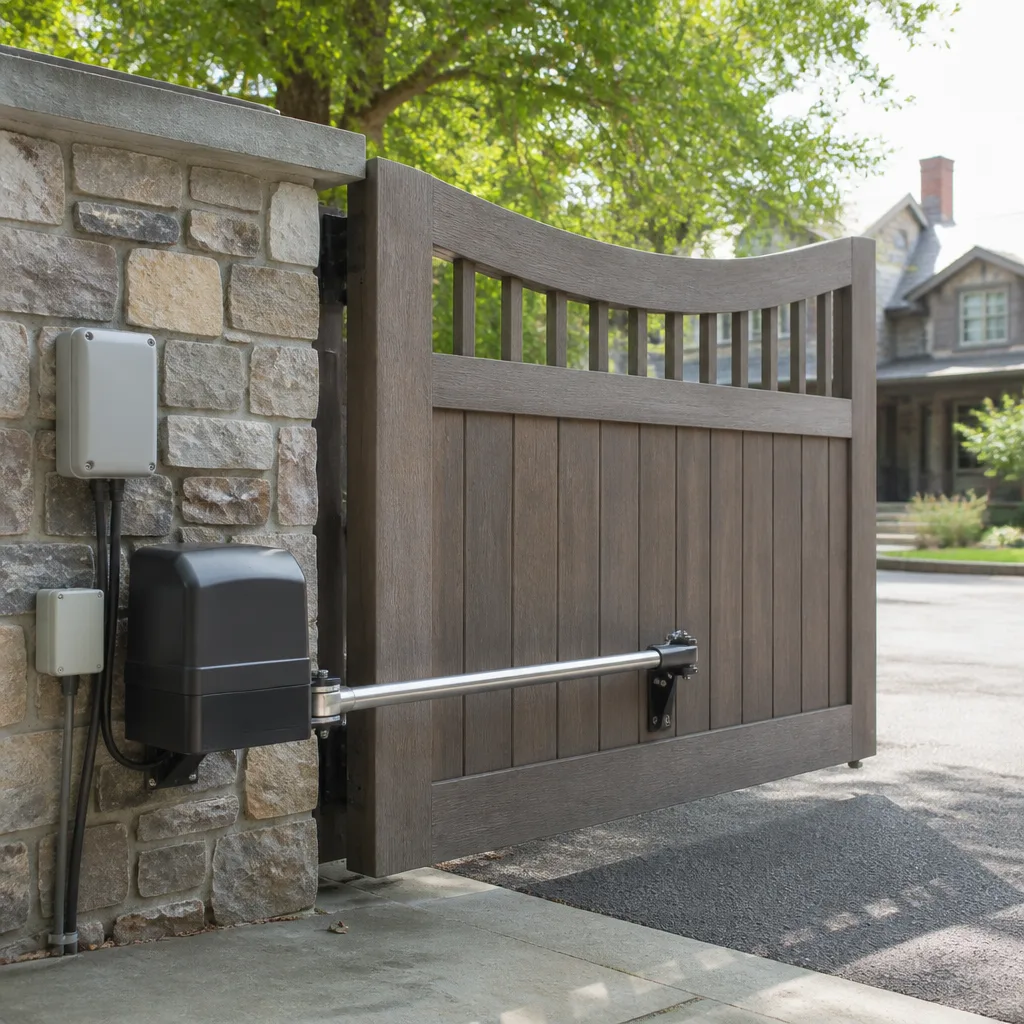
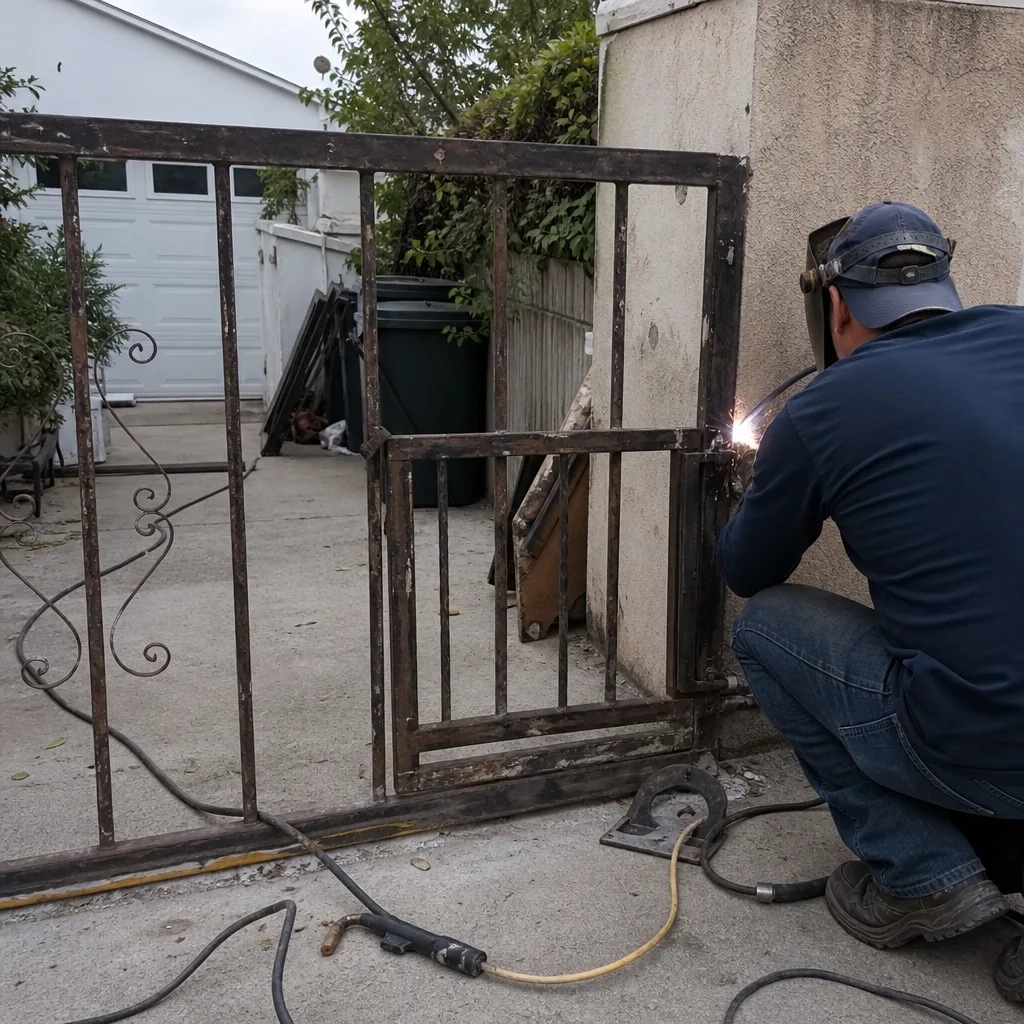 Before
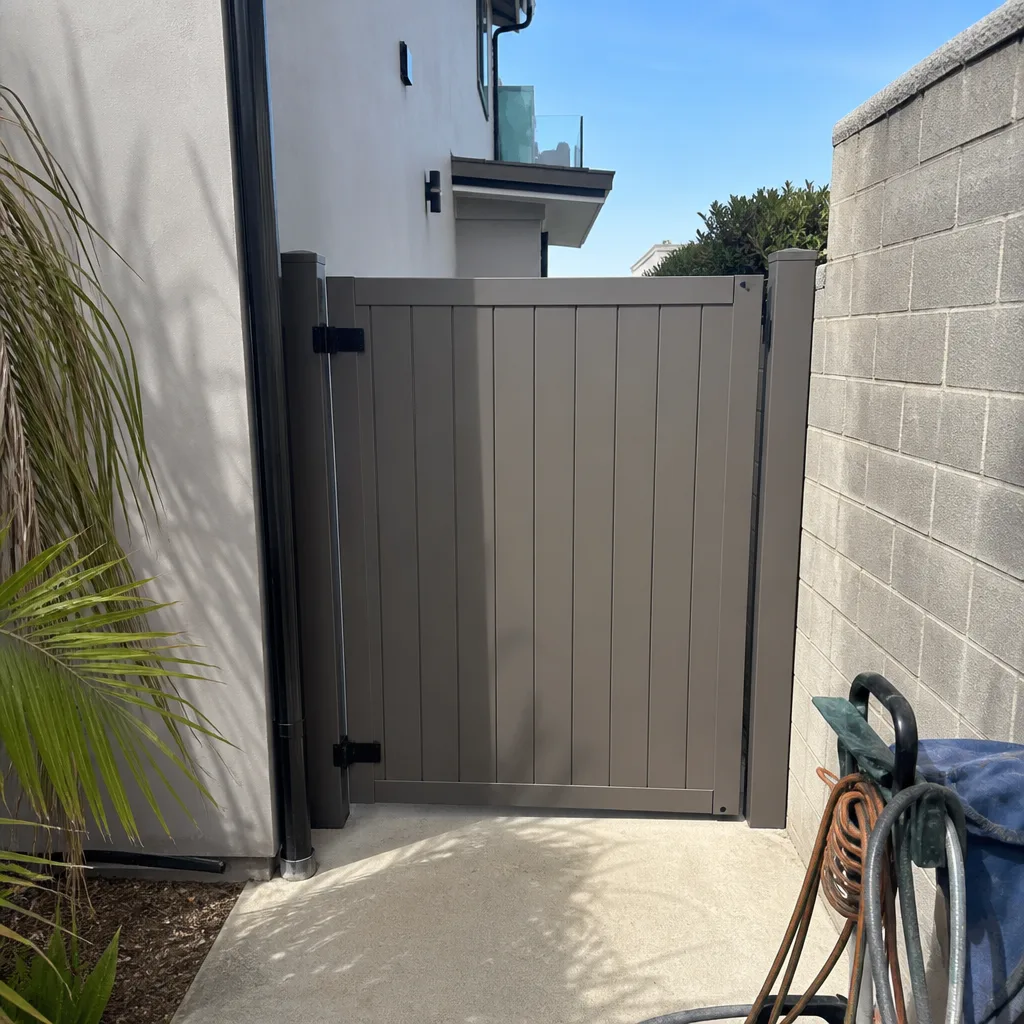 After
After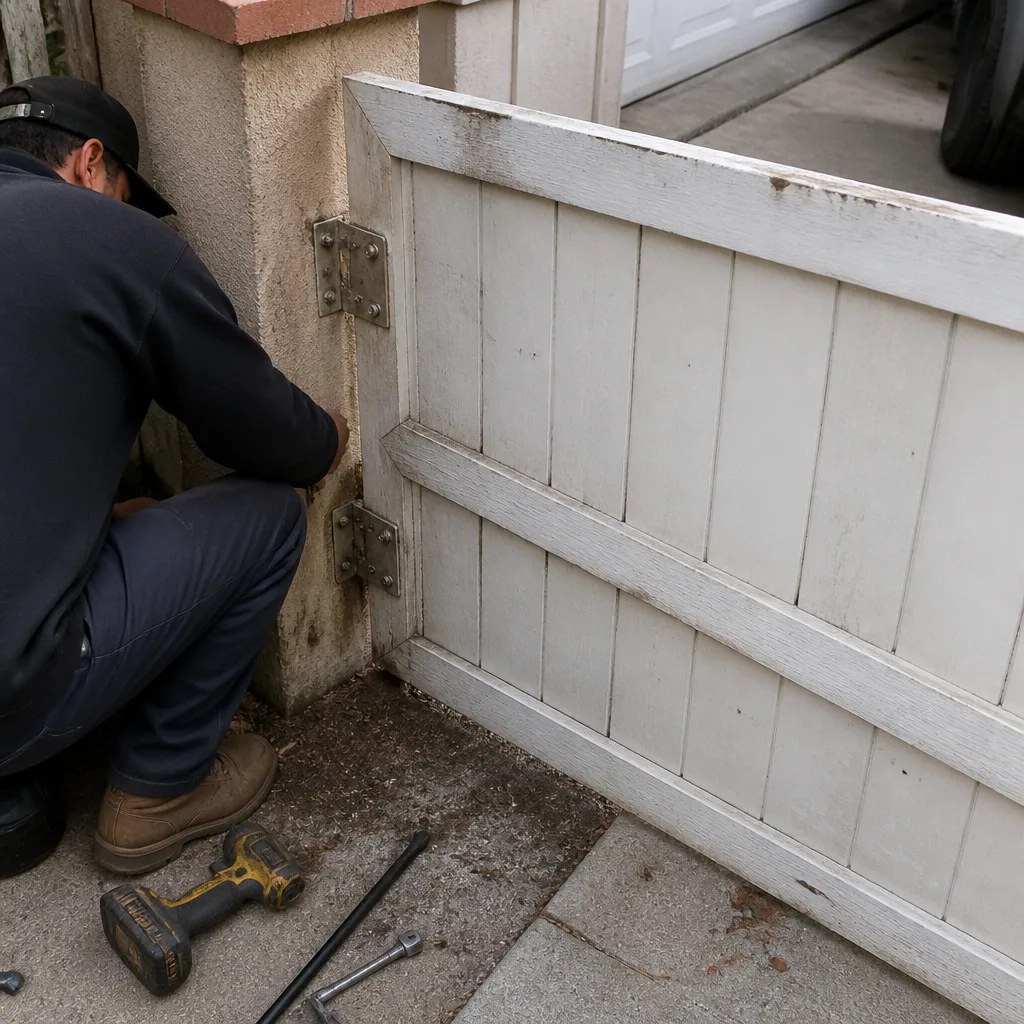 Before
 After
After Before
 After
AfterSeasonal Gate Repair Care for Hermosa Beach: Year-Round Homeowner’s Guide
The salt air that gives Hermosa Beach its character is the same salt air that quietly eats through gate hinges, corrodes circuit boards, and shortens the life of a gate opener by a solid five years when compared to inland homes. Homeowners who treat a driveway gate like a set-it-and-forget-it appliance usually discover this during a winter storm, when the gate refuses to open and the car is stuck on the wrong side. This guide covers what actually wears out on Hermosa Beach gates, when it wears out, and the simple seasonal checks that prevent most failures. If you’ve ever wondered why your neighbor’s gate still glides after twenty years while yours grinds and stutters, the answer is rarely the brand of opener. It’s the seasonal care.
Quick Answer
Seasonal gate care in Hermosa Beach means four things: washing salt residue off metal and tracks every month during summer, checking and lubricating hinges and rollers each quarter, testing the opener’s force settings and safety edges when temperatures swing, and having a professional inspect the motor and electrical connections once a year. Budget roughly $89 to $150 annually for a professional tune-up, or expect to spend $400 to $900 every five to seven years replacing components that failed early from neglect.
Table of Contents
- Why Hermosa Beach Is Harder on Gates Than Inland Cities
- Spring Gate Care: Recovering from Winter Salt and Storms
- Summer Gate Care: Salt, Sun, and Constant Use
- Fall Gate Care: Preparing for Rain and Marine Layer
- Winter Gate Care: Storms, Power, and Rust Prevention
- The Monthly Five-Minute Gate Check Every Homeowner Should Do
- Gate Opener and Motor Care: The Electrical Side of a Salt-Air Gate
- Common Mistakes to Avoid
- When to Call a Professional
- Frequently Asked Questions
- The Bottom Line
Why Hermosa Beach Is Harder on Gates Than Inland Cities
A gate in Hermosa Beach ages differently than the same gate in Torrance or Redondo Beach, and the difference comes down to three things: salt aerosol, constant humidity, and surprisingly aggressive sun exposure. The marine layer that rolls in most evenings deposits a fine film of salt on every metal surface. That film attracts moisture. Moisture plus salt equals corrosion, and corrosion is what kills gate hinges, rollers, track welds, and the exposed terminals on opener control boards.
We routinely see gates within six blocks of The Strand that show rust pitting on steel hinges within three years of installation. The identical hinge installed east of Pacific Coast Highway might go a decade before showing the same wear. This is not a manufacturing defect. It’s the environment, and the only defense is a consistent seasonal routine of cleaning and lubrication.
Sun exposure matters too. West-facing gates on streets like Loma Drive or those near Valley Park take direct afternoon sun that bakes powder coating, fades finishes, and expands metal components. Galvanized hardware survives. Cheap zinc-plated hardware does not. When you replace any gate part within two miles of the ocean, marine-grade stainless steel or hot-dip galvanized hardware is not an upgrade. It’s the baseline for surviving more than a few seasons.
Spring Gate Care: Recovering from Winter Salt and Storms
Spring is when Hermosa Beach gates reveal what winter did to them. The first warm weeks after the rainy season are the right time to inspect every moving part, because rust blooms in spring. Metal that got wet for weeks dries out, and the corrosion that started invisibly in February becomes flaky orange scale by April.
Here is the spring service routine we recommend, in order:
- Wash the entire gate and track system. Use a bucket of warm water with a few drops of dish soap and a soft brush. Rinse thoroughly. The goal is to remove the salt film that accumulated over winter, not just to make the gate look clean.
- Inspect every hinge, bolt, and weld for rust or cracking. Surface rust can be wire-brushed and painted with a rust-inhibiting primer. Deep rust that crumbles when scraped means the part needs replacement. Pay special attention to the bottom hinge, which catches the most splashback.
- Check the track and rollers. Wipe debris and salt grit from the track channel. Look for flat spots on rollers or wobble in the wheels. A roller with a flat spot will thump with every pass and eventually damage the track itself.
- Lubricate pivot points. Use a dry silicone spray or white lithium grease on hinge pins, roller bearings, and the track. Do not use WD-40 as a lubricant; it displaces water but leaves almost no lasting film.
- Test the opener’s auto-reverse and safety edges. Place a 2×4 or a rolled towel in the gate’s closing path and confirm the gate stops and reverses. If it does not, set force limits immediately and call a technician if you cannot adjust them yourself.
Spring is also the best time to schedule an $89 Seasonal Tune-Up, which covers the full adjustment pass: hinge tension, track alignment, opener force, limit switches, and safety edge testing all in one visit. In Hermosa Beach, demand for spring tune-ups builds fast once the marine layer thins out. Booking in March beats waiting until June.
Summer Gate Care: Salt, Sun, and Constant Use
Summer in Hermosa Beach means the gate cycles two to three times more often than it does in winter. Every trip to the beach, every visitor, every barbecue run to the market puts another open and close cycle on the opener motor, the gears, the hinges, and the track. More cycles, more heat, and daily salt spray add up to the highest-stress season for a driveway gate.
The single highest-value summer habit is a monthly wash. You do not need a pressure washer; garden-hose pressure is fine. Wet the gate, wipe it down with a soft cloth or brush, and rinse. Do this on a morning when the marine layer is still overhead so the sun does not bake the water off too fast and leave streaks. The point is to get the salt off before it has time to sit and react.
Summer brings another issue specific to Hermosa Beach: gate lubrication that turns to sludge. High ambient heat plus direct sun on a dark metal gate can thin some greases until they drip out of the hinge and attract sand, creating a gritty paste that accelerates wear. If your hinges look like they are oozing black grease in July, the wrong lubricant was used. A dry spray lubricant made for marine environments holds up better here than a heavy axle grease.
Check the opener motor housing for heat buildup. After a long afternoon in the sun, place a hand on the motor cover. It will be warm; that is normal. If it is too hot to hold for five seconds, that is not normal, and the unit is working under excessive load. A gate that binds slightly at the end of its travel will strain the motor more in summer when everything has expanded. Adjusting the opener’s force settings and limit stops in June prevents most August motor failures.
Fall Gate Care: Preparing for Rain and Marine Layer
Fall is the preparation season in Hermosa Beach. The long dry stretch ends, the marine layer thickens, and the first real rains arrive, usually in November or December. A gate that has run fine all summer can fail within days of the first soaking rain if its electrical connections were never protected and its metal was never sealed.
The fall routine has three priorities:
- Seal bare metal before the rains arrive. Any chip in the powder coat, scratch on a steel picket, or rust spot on a weld should be sanded lightly, primed, and touched up with a rust-inhibiting paint. Once rain gets under the coating, rust spreads under the finish like a slow blister, and you will not see it until the paint flakes off in sheets.
- Check all weather gaskets and wire seals. The control board enclosure, the keypad housing, and the photo-eye housings all have rubber gaskets that dry out and crack. A cracked gasket is an open door for moisture. In the damp weeks before the rains, a control board can already be sweating inside its own housing. Replace any gasket that feels stiff or shows cracks.
- Check drainage around the gate track. If water pools at the base of the gate posts, it will wick up into the posts and rust them from the inside. Clear leaves, sand, and built-up grit from the track channel and confirm water can drain away. Homes on flat lots near the greenbelt are especially prone to standing water at gate posts.
Fall is also the right time to test the battery backup on your opener, if you have one. A backup battery that sits untested for a year is a backup battery that will be dead the night the power goes out. Run a test cycle on battery power alone in October, before the storm season makes it a real-time experiment.
Winter Gate Care: Storms, Power, and Rust Prevention
Winter is when Hermosa Beach gates call it quits. The combination of rain, wind-driven salt spray, power flickers, and cold metal contracting against its own fasteners is enough to expose every neglected maintenance item in a single night. In our experience, the most common winter failure is not a broken motor. It’s a corroded connection or a safety sensor knocked out of alignment by wind and rain.
During a winter storm, keep one simple rule in mind: if the gate is stuttering, grinding, or moving slower than normal, stop using it and put it in manual mode. Forcing a gate to operate while it is binding or shorting can burn out a motor in a single cycle. Most openers have a mechanical release, usually a lever or a keyed release on the motor or the gate arm. Pulling the release disconnects the motor so the gate can be pushed by hand.
After each significant storm, do a visual pass: check that the gate still travels smoothly from end to end, that both safety edges still respond, and that no debris has lodged in the track. Check the control board enclosure for fogging or water droplets inside the cover. Moisture inside a control board housing in winter is a one-way trip to a $300 to $600 board replacement in spring if it is not dried out and resealed quickly.
One more winter consideration for Hermosa Beach: wind. A solid, non-perforated gate is a sail. Strong Santa Ana winds out of the east push against the gate and load every hinge, bracket, and the opener arm itself. A gate that is already slightly out of square will stress its hardware under wind load and eventually pull screws or crack welds. If your gate shows wind movement, the fix is usually stiffer hinges, a track stop at the closed position, or a wind kit on the opener arm, not a bigger motor.
The Monthly Five-Minute Gate Check Every Homeowner Should Do
This is the habit that separates gates that last twenty-five years from gates that die at twelve. Once a month, on the same weekend, walk the gate through these five checks. It takes about five minutes, and the only tool required is a pair of eyes and a hand.
The Five-Minute Monthly Gate Check
- Listen. Run the gate one full cycle. It should sound the same as it always does: a steady motor hum and smooth rolling. A new grinding, squealing, or thumping noise is the earliest warning of a failing part. New noises never fix themselves.
- Watch the travel. The gate should move at an even speed from start to finish. If it slows down near the end, hesitates mid-travel, or seems to struggle right at the start, something is binding or the opener is losing force. Operate the gate and watch it the way a mechanic listens to an engine.
- Touch the hardware. Grab each hinge post and try to wiggle the gate. Movement at a hinge means a worn pin or bushing. Tighten any visible bolts that have backed out, but if a bolt turns without snugging up, the hole has stripped and needs a threaded insert or a larger fastener.
- Look at the track and rollers. Leaves, sand, and salt crust build up in the track channel, especially at the closed position. Brush or wipe the track clean. A track full of grit works like sandpaper on the wheels.
- Glance at the electrical. Open the control board cover if you are comfortable doing so. Look for corrosion at the wire terminals, any dark burn marks, or moisture. If the terminals look crusty and white, call a gate technician before the board fails completely.
That is the whole routine. Five minutes, once a month. In Hermosa Beach, this one habit prevents more gate failures than all the repairs we will ever do.
Gate Opener and Motor Care: The Electrical Side of a Salt-Air Gate
The mechanical parts of a Hermosa Beach gate rust visibly and predictably. The electrical parts fail invisibly and suddenly. A gate opener motor, gearbox, and control board live inside a metal or plastic housing that should protect them from the elements, but salt air finds its way into every micro-crack, every dried gasket, every screw hole. By the time a control board shows visible corrosion, it has usually already failed or is days away from failing.
Halogen and LED photo-eyes face the same reality. The small lens covers that protect the sensors scratch and fog over time. Salt residue builds up on the lens surface and eventually blocks the beam, which makes the opener think something is in the gate’s path. The symptom is a gate that stops halfway open, or refuses to close at all, with no visible obstruction. A quick wipe with a damp cloth usually restores function, but if the issue recurs, the photo-eye alignment or the wiring to the sensor is the culprit.
We train our technicians on the nine brands most common on Hermosa Beach driveways: LiftMaster, FAAC, BFT, Linear, Viking, Ghost Controls, DoorKing, Elite, and Mighty Mule. The reason that matters to a homeowner is diagnosis speed. A technician who spent the morning working on a LiftMaster swing opener and the afternoon on a DoorKing slide opener knows from the first sound which component is failing and which parts to have on the truck. Some repair companies carry one brand and adapt it to everything. That is how a $150 fix becomes a $900 replacement.
The single most important electrical maintenance step for a homeowner: keep the control board enclosure dry. If the gasket is cracked, replace it. If condensation forms inside the box, open it and dry it out, then find where the moisture is getting in. A Mighty Mule board that fails from moisture is a $250 to $400 part, plus labor. The gasket that would have prevented the failure costs about twelve dollars.
Test your opener’s auto-reverse and force settings seasonally. Every manufacturer sets these at the factory, but as the gate ages and the track wears, the force required to move it changes. An opener that needs more force to close is telling you the mechanical system needs attention. Crank the force up to compensate, and the gate becomes a safety hazard. We have seen gates with force settings so high the gate would crush a bicycle without reversing. Set the force correctly, and fix the mechanical issue instead of overpowering it.
Common Mistakes to Avoid
- Using WD-40 as a lubricant. WD-40 is a water displacer, not a long-term lubricant. In Hermosa Beach’s salt air, it evaporates within days and leaves hinges dry and unprotected. Use a marine-grade silicone spray or white lithium grease on hinge pins and rollers.
- Painting over rust without treating it first. Paint does not kill rust; it gives rust a warm, dark place to keep eating metal out of sight. Wire-brush or sand the rust off, apply a rust converter or primer, then paint. Skipping the primer is how Hermosa Beach gates get those paint blisters that flake off in sheets.
- Ignoring a noisy gate. A new squeal, grind, or thump is the gate telling you something is failing. Gates do not get noisy because they are old; they get noisy because a bearing is dry, a roller is flat, or a hinge is wearing. Fixing the noise early typically costs a fraction of fixing the damage it eventually causes.
- Power-washing the gate and opener. High-pressure water forces salt and moisture past seals and into the opener motor, the gearbox, and the control board. Use a garden hose or a bucket and brush instead. Pressure washers are for concrete, not gate electronics.
- Cranking up the opener force to fix a sticky gate. If the gate binds and the easy fix is turning the force dial up, the gate binds because something mechanical is wrong. More force means more wear on every component and a gate that can crush rather than reverse. Find the bind and fix it.
- Waiting for a total failure before calling anyone. Most catastrophic gate repairs in Hermosa Beach start as a $150 fix three months earlier. A torn roller, a stripped hinge, a sticky limit switch: these are cheap and fast to address when caught early. The same neglect that lets a $20 roller destroy a $400 track is the most expensive mistake we see.
When to Call a Professional
Some gate work is homeowner work. Cleaning, lubricating, tightening visible bolts, and wiping photo-eye lenses are all reasonable for a homeowner. Other work is not. If the gate is sagging at the free end, if the opener motor hums but the gate does not move, if a hinge has visible cracks, or if the control board shows burned or corroded terminals, stop and call someone who works on gates every day. Attempting a spring or counterbalance adjustment on a heavy gate without the right tools and training is dangerous; a gate that weighs four hundred pounds carries enough stored energy to break bones. We would rather tell a homeowner over the phone that a fix is simple and free than have them hurt themselves trying to save a service call.
Ironworks Gate Co. offers free estimates in Hermosa Beach, and we will give you a square deal: the price is quoted and agreed before any work starts, and every job is backed by our written 90-Day Done Right Promise. Call (279) 263-9485. A live person answers, day or night.
Frequently Asked Questions
Gate repair in Hermosa Beach typically runs $150 to $450 for most mechanical fixes like hinge replacement, roller replacement, or track realignment. Opener and control board repairs run $250 to $600 depending on the brand and the part. Full opener replacement starts around $800 and goes up with the size and weight of the gate. Ironworks Gate Co. charges with upfront pricing agreed before work starts, so the invoice matches the quote, every time. Call (279) 263-9485 for an exact quote.
Yes, we complete most gate repairs in Hermosa Beach in a single visit, and live phone support is available 24 hours a day, 7 days a week. If the failure is urgent, tell the person on the phone what happened and we will work out the fastest possible response. Our trucks carry parts for nine opener brands including LiftMaster, DoorKing, and Elite, so we can usually diagnose and fix in one trip.
Gate manufacturers recommend a professional inspection and tune-up once a year, and Hermosa Beach’s salt air makes that annual schedule the minimum rather than the ideal. Homeowners within six blocks of the ocean should consider a tune-up every six to nine months. Ironworks Gate Co. offers an $89 Seasonal Tune-Up that covers hinge adjustment, track alignment, opener force, limits, and safety edges in one visit.
A gate that stops mid-travel or refuses to close is almost always a safety sensor issue: the photo-eyes are misaligned, dirty, or failing, or the safety edge on the gate’s leading edge is sending a false obstruction signal. Clean the photo-eye lenses first. If the problem persists, the sensors need alignment or replacement, which is a quick fix for a technician. Do not disable or bypass the safety sensors to force the gate closed; those sensors exist to protect people and cars.
Yes, and Hermosa Beach has some of the most concentrated salt air in Los Angeles County. Salt aerosol settles on every exposed metal surface and inside every unsealed enclosure. It corrodes terminals, pits hinges, and eventually shorts control boards. The most effective defense is a consistent seasonal routine: monthly washing of the gate and track, quarterly lubrication, and annual inspection of electrical enclosures and gaskets. This routine adds years to the life of the opener and the gate.
Ironworks Gate Co. services nine major gate-automation brands: LiftMaster, FAAC, BFT, Linear, Viking, Ghost Controls, DoorKing, Elite, and Mighty Mule. If your opener is one of these, we stock common parts and know the failure modes. If it is an older or less common unit, call us and describe what you have; we will tell you honestly whether we can source parts or whether a replacement makes better long-term sense. Estimates are free.
The Bottom Line
A gate in Hermosa Beach will last as long as its owner’s seasonal routine. The ocean is not going anywhere, the salt air is not going anywhere, and the sun is not going anywhere. What changes is the difference between a homeowner who washes and lubricates and checks, and a homeowner who waits for the grinding sound. The first homeowner spends a few hours a year and keeps the same gate for two decades. The second spends five hundred dollars every time the gate stops working and never understands why. Seasonal care is cheap, boring, and quietly effective. That is exactly why it works.
If you want an honest assessment of what your gate needs, or you want the $89 Seasonal Tune-Up done by someone who works on Hermosa Beach gates every day, call Ironworks Gate Co. at (279) 263-9485. We will be there when we say, the price will be clear before we start, and the work comes with the 90-Day Done Right Promise in writing. That is the deal, and we stand behind it.
Written by Victor Salinas, Owner at Ironworks Gate Co., serving Hermosa Beach since 2013. Ironworks Gate Co. home